TikTok Partners With MADE BY US STUDIOS on Micro-Series
TikTok has partnered with MADE BY US STUDIOS on creator-led micro-series, combining the social media platform with a studio focused on short-form entertainment. The partnership

TikTok has partnered with MADE BY US STUDIOS on creator-led micro-series, combining the social media platform with a studio focused on short-form entertainment. The partnership







Coachella continues to influence how brands and creators collaborate, with the 2026 festival cycle reflecting clear adjustments in influencer marketing strategy. Activity across the event shows a stronger focus on access, functionality, and content speed rather than static visibility alone. Coachella Influencer Marketing Centers on Access and Functionality Coachella has moved beyond product placement as the primary form of brand exposure. Activations across the 2026 event cycle show a shift toward services that support creators during the festival experience. Brands are building structured environments such as branded lounges, shaded rest areas, and content-friendly zones that allow creators to remain active throughout the day. These spaces are designed to accommodate filming, editing, and publishing without interrupting the pace of live coverage. The objective is to align brand presence with how creators operate in real time. Coverage of the festival confirms that experiential formats are now central to brand participation. Instead of focusing on distribution alone, companies are positioning themselves within the daily routines of attendees and creators. This includes wellness-oriented activations, fashion-focused installations, and spaces designed for content capture. Creators such as Emma Chamberlain and Alix Earle have contributed to this shift by documenting full festival experiences that integrate brand interactions

Netflix is set to premiere a reality series in 2026 that will delve into the life of social media sensation Alix Earle. Known for her viral “Get Ready with Me” videos, Earle is transitioning from short-form social media content to long-form streaming. The show, produced by Fulwell Entertainment, will provide an intimate look at Earle’s personal and professional life, moving beyond her curated online persona. The series will follow the daily operations of the Earle family, highlighting both their private lives in Miami and their travel schedules. This shift in media strategy marks a new phase in Earle’s career as she steps into a more traditional production format, leaving behind the personal control she once held over her content. Inside Alix Earle’s Family and Personal Life At the heart of the Netflix series is the Earle family, including Alix’s sister, Ashtin Earle, who is also an influential content creator. The series will explore the dynamics of their family relationships and the personal challenges they face while navigating life in the public eye. The project aims to present a more grounded and humanized version of the family, moving away from the polished image typical of influencer content. The show will address

By: Dr. Jeffrey N. Shebovsky | ReliefNow® Disc·Joint·Nerve Hamlin | Winter Garden, Florida Non-surgical disc decompression combined with Class IV medical-grade laser therapy is a clinically supported, drug-free alternative to back surgery for patients with herniated discs, sciatica, degenerative disc disease, and chronic nerve pain. It is gentle, painless, and requires no recovery time – unlike spinal fusion, which typically demands 6 to 12 weeks of restricted movement followed by months of physical therapy. At ReliefNow® Disc·Joint·Nerve Hamlin in Winter Garden, Florida, Dr. Jeffrey N. Shebovsky works with patients throughout Central Florida who have often spent months or years searching for a lasting answer to disc and nerve pain. For many of those patients, that answer was available the entire time – they simply were not pointed toward it first. What Is the Health Investment That Is Helping People Reclaim Their Lives Non-surgical disc decompression uses a computerized table to apply gentle, precisely calibrated traction in distraction-relaxation cycles. This cycling prevents the body’s reflex to tighten against the pull – the critical flaw of older traction methods – and creates negative pressure inside the disc. That negative pressure draws herniated or bulging material back toward its natural position while pulling

Running an online business requires constant attention to detail. Whether you’re managing a store on Amazon, eBay, Walmart Marketplace, or Shopify, the administrative tasks can quickly add up. This is where Ecom Done For You comes in. The brand offers fully automated e-commerce solutions that streamline your operations, allowing you to focus on growth without the headache of manual work. At Ecom Done For You, the goal is simple: to help entrepreneurs launch fully automated e-commerce stores with a system that integrates seamlessly across platforms. By providing automation services, the company ensures that businesses can run smarter, faster, and with fewer errors. You can rest easy knowing that your product listings, order processing, inventory updates, and customer support workflows are taken care of. Learn more about how automation can transform your online store with Ecom Done For You’s services. A New Era of E-Commerce Automation Ecom Done For You specializes in building e-commerce stores that operate smoothly and scale efficiently with demand. Their services are designed to support a variety of marketplaces, including Amazon, Walmart, Shopify, and even TikTok Shop. Each platform has its unique needs, and Ecom Done For You addresses those challenges with tailored solutions. When you partner

In The Apostle of Andras, G.C. Cameron introduces readers to a galaxy at war, a place where loyalty, power, and survival collide in ways that leave no one untouched. Among the chaos are lives that anchor the story in human and sometimes inhuman emotion. Hayden, Tharzen, and Viviana are not merely players in a cosmic conflict. Their choices, doubts, and resilience drive the narrative forward, pulling the reader into the tension of every scene. Hayden moves through the story with a weight few can bear. Chosen by a god to serve in a holy war he never wanted, he bears the burden of both expectation and past failure. The memory of what he lost and whom he failed shadows every decision. Even after a victory that might have ended the war, he cannot escape the war within himself. Late nights on warships orbiting contested planets find him alone, staring at starlight through reinforced glass, wondering if duty will ever allow him rest. Readers follow Hayden not because he is flawless, but because every moment of reluctance and every temptation to step away magnifies the stakes of the universe around him. Tharzen offers a striking contrast. Born into privilege as the

By: Chelsea Williams, PR Representative, BBMgmt PR Firm In the fast-moving world of entertainment, where visibility and relevance are currency, timing and strategy matter just as much as talent. During the electrifying week of South by Southwest, the globally recognized convergence of innovation, music, film, television, and comedy, BB PR Management made a bold and calculated move. From March 12–15, the firm hosted an exclusive Content House activation, bringing together a curated mix of creatives, artists, influencers, and industry professionals under one roof in Austin, Texas. The decision to align the Content House with SXSW was far from coincidental. SXSW, held annually every March, has long been regarded as a cultural epicenter where emerging talent meets established power players. It is a space where innovation thrives, deals are made, and careers are accelerated. By launching their Content House during this high-traffic week, BB PR Management was able to tap into an ecosystem already primed for collaboration, exposure, and discovery. At its core, a content house is designed for one primary goal: high-volume content creation. But BB PR Management elevated that concept into something far more strategic. This was not just about filming videos or capturing social media moments; it was

By Marcy Paulson Carina Radonich didn’t build a typical Orlando resort. Instead, she built a place for families who travel with hope and heart. Each area of Magic Moment Resort and Kids Club in Kissimmee invites families to relax into being together. Wherever they go, children find places to play and explore, and parents can finally slow down. “We put far more value on shared experiences than we do on the standard amenities you see at typical resorts,” explains Radonich. “It’s why so many families are talking about what they find here. Our goal isn’t to impress. Our goal is to touch lives and hearts.” How Magic Moment Resort and Kids Club Creates Child-Focused Amenities That Drive Social Sharing and Influencer Buzz When a child lights up with curiosity, parents reach for their phones. They’re not staging content; they’re saving a real moment. “We design specifically for these wonderful moments,” says Radonich. “Our Kids Club invites play and storytelling, and our playground is full of color and warmth. Our more than 40 immersive themed rooms invite kids to engage and play” These choices spark real smiles and natural laughter. A bubble party turns into a treasured clip. A chalkboard wall

The 2026 World Happiness Report, a global analysis coordinated by the University of Oxford’s Wellbeing Research Centre, suggests a notable connection between heavy social media use and a decline in the wellbeing of Generation Z. The report, which uses data from multiple global sources, indicates that extended engagement with platforms like Instagram, TikTok, and Snapchat may be contributing to lower life satisfaction among younger users. Researchers caution, however, that while these trends are concerning, the connection between social media and mental health is complex and requires more research to fully understand. The report notes that young people who engage heavily with social media are more likely to report heightened levels of stress, anxiety, and dissatisfaction compared to those who use these platforms more casually. While the study does not establish a direct cause-and-effect relationship, it underscores the growing concern around the impact of social media on young people’s emotional wellbeing. Intensity of Social Media Use Correlates With Mental Health Challenges According to the findings, the intensity of social media use may play a role in the emotional wellbeing of Gen Z. Those who spend more than five hours a day on social media platforms often report higher levels of anxiety,
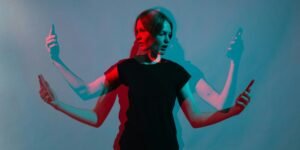
A new trend is gaining traction on TikTok and other platforms: AI doppelgangers—digital twins designed to replicate influencers’ personalities, voices, and presence. Unlike avatars or basic filters, these AI-generated personas allow influencers to appear in multiple campaigns without physically being present. By offering a seamless, scalable alternative to traditional content production, AI doppelgangers are reshaping the influencer marketing landscape. The Power of Digital Twins in Influencer Marketing AI-powered doppelgangers are gaining popularity for their ability to mimic human behavior across various platforms. These digital personas allow brands to scale content production, bypassing traditional logistical hurdles such as travel or shooting multiple takes. By using an AI twin, brands can quickly generate content across multiple languages and markets without relying on influencers to record separate versions. For example, a single AI twin can deliver campaigns in English, Mandarin, or Spanish, helping brands expand their reach globally and with consistency. AI Duplicates Open New Possibilities for Global Campaigns As businesses look to broaden their marketing strategies, AI doppelgangers enable an influencer to be in multiple places at once—making them ideal for global campaigns. While human influencers face challenges like scheduling, language barriers, and physical constraints, AI versions can be present in a

By: Lennard James Washington, D.C. didn’t just host Go-Go; it made Go-Go. From neighborhood clubs to rec centers and church basements, the district forged a live, percussive sound built on congas, timbales, tight guitar vamps, and a relentless pocket that invites the crowd to answer back. That call-and-response culture turned local shows into communal rituals—and today, as stages fill and streams climb, Go-Go is enjoying a surge that in many D.C. rooms rivals and sometimes outdraws hip-hop and R&B. The beat that began as the city’s heartbeat is increasingly setting the national pulse. Few industry figures understood that potential earlier or acted on it more effectively than Dr. Logan Westbrooks. In the late 1970s, when Go-Go throbbed across the district but remained largely local, Westbrooks recognized a sound with the strength to travel without losing its roots. His boldest move captured that thesis: he signed Chuck Brown and the Soul Searchers to the brand-new Source Records and crafted a rollout designed not merely to score a hit but to carry a culture. Westbrook’s bet wasn’t just that “Bustin’ Loose” could climb charts; it was that Go-Go’s neighborhood energy could be translated across radio formats and retail counters intact. He started

The landscape of celebrity culture is evolving, with social media influencers becoming increasingly prominent figures in popular culture. Platforms like TikTok, Instagram, and YouTube have enabled many individuals to gain significant attention and build large followings, often without the support of traditional Hollywood structures such as studios or record labels. These platforms have created new opportunities for people to connect with audiences, broadening the way fame is understood and consumed. Influencers like Charli D’Amelio and Addison Rae have seen their audiences grow substantially, demonstrating how digital platforms can provide paths to stardom that bypass traditional entertainment routes. Their rise points to a shift where digital presence plays an important role in achieving celebrity status. Influencers and Their Expanding Reach Many influencers now engage with audiences in ways that resonate strongly, particularly with younger demographics. These influencers often have direct and frequent interactions with their followers through regular, personal content. For younger viewers, this can create a sense of closeness and relatability that is often less apparent in the more polished and distant portrayals seen from traditional Hollywood celebrities. This growing visibility is visible not only in follower counts but also in the level of interaction that influencers generate. Their ability

Major League Baseball (MLB) has significantly expanded its partnership with TikTok for 2026, establishing the platform as a core part of its fan engagement strategy. With a focus on growing the sport’s global presence, MLB is using TikTok to reach younger audiences and drive deeper fan interactions. Announced ahead of Spring Training 2026, the collaboration grants select creators access to MLB’s current and archival content. This access empowers these digital influencers to create fresh narratives around the sport, using highlights, behind-the-scenes footage, and player interactions to generate short-form content that connects with TikTok’s worldwide audience. By tapping into TikTok’s broad reach, MLB aims to not only entertain but also foster a global community around baseball. Creators Amplify MLB’s Fandom in New Digital Era Rather than relying on traditional marketing channels, MLB is turning to creators who are deeply embedded in niche baseball communities. These creators bring authenticity and relatability to their content, helping MLB extend its reach beyond the conventional audience. The league’s partnership allows creators to remix archival clips, highlight emerging players, and share stories that resonate with local and global fanbases alike. By offering exclusive access to events and content, MLB has positioned creators as key ambassadors of

NBC has officially announced that influencer-comedian Druski will join The Voice: Battle of Champions as the first-ever commentator in the history of the show. This marks a major shift in how traditional reality TV formats incorporate the digital-native culture of influencers. Known for his comedic sketches and millions of followers across platforms like TikTok, Instagram, and YouTube, Druski’s inclusion adds a dynamic layer to the show, designed to bring humor, insight, and a creator-driven personality to the long-running music competition. His role as a commentator will involve offering behind-the-scenes commentary on the performances, coaching decisions, and overall progression of the contestants, all while maintaining the signature humor that has garnered him a large online following. His addition reflects NBC’s broader strategy to refresh The Voice and appeal to a younger, social media-savvy audience. Blending Creator Culture with Mainstream TV The appointment of Druski highlights an ongoing trend in the entertainment industry—merging influencer culture with traditional television formats. Over the last few years, influencers have grown from social media stars to prominent figures in mainstream entertainment, and Druski is one of the latest examples of this shift. His massive reach on platforms like Instagram, TikTok, and YouTube has positioned him as

A new home is more than just a change of address — it represents fresh beginnings, new memories, and exciting milestones. Whether it’s a first apartment, a dream house, or a newly renovated space, housewarming celebrations are special moments that deserve thoughtful gifts. One of the most elegant and widely appreciated options is a housewarming wine gift basket, which combines style, warmth, and practicality in a single present. Why a Wine Gift Basket Is Perfect for Housewarming When choosing a housewarming gift, people often look for something meaningful yet useful. Wine gift baskets can fit this need because they are both celebratory and practical. Wine naturally symbolizes joy, prosperity, and togetherness, making it an ideal choice to welcome someone into a new home. Unlike more generic gifts, a wine basket feels more personal and premium. It shows that you’ve put thought into selecting something sophisticated that the recipient can enjoy during celebrations, dinners, or relaxing evenings in their new space. A Gift That Matches Any Style One of the biggest advantages of a housewarming wine gift basket is its versatility. It works well for: Friends and family members New neighbors Colleagues or business associates Clients in corporate settings Because wine

In today’s corporate landscape, the venue is more than a location — it is a statement. The right space conveys professionalism, attention to detail, and an understanding of how environment shapes experience. Modern corporate gatherings demand atmosphere as much as efficiency, blending operational precision with curated moments that leave lasting impressions on clients, partners, and colleagues alike. For companies seeking a distinguished venue in Hudson County, 87 Sussex has quickly become a preferred destination. With its historic character, adaptable layout, and proximity to Manhattan, 87 Sussex transforms corporate events into gatherings that are simultaneously intimate, polished, and memorable. A Boutique Scale That Fosters Connection Corporate events today are increasingly defined by engagement rather than headcount. In larger venues, attendees can feel lost or disconnected; at 87 Sussex, the boutique scale ensures every guest feels present and valued. The space allows hosts to: Cultivate meaningful interactions among attendees Maintain energy and attention throughout the event Create a cohesive experience from arrival to close Host presentations, networking, and celebrations within a single flow This scale turns every gathering into an intentionally designed experience rather than a transactional meeting. Architectural Character That Speaks for Itself The venue’s design elevates any event without requiring