
By: Jay KT
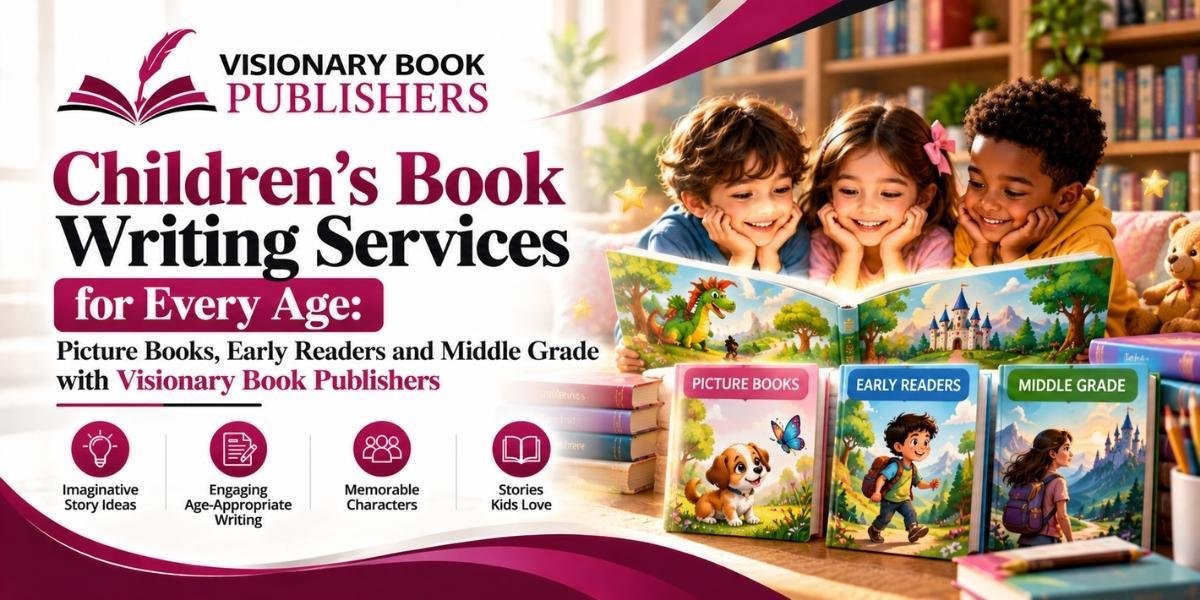
Children change rapidly as readers. A toddler delights in sounds and repetition, a six-year-old proudly sounds out simple sentences, and a ten-year-old disappears into chapter books for hours. Each stage calls for a different kind of book, and the most successful children’s book writers know how to match story, language and length to the age of the reader. At Visionary Book Publishers, our writing team helps authors choose the right format for their idea and craft a manuscript that suits its audience. In this guide, we explore the main categories of children’s books and how our ghostwriting services support each one.
Board Books: The Very First Readers
Board books are designed for babies and toddlers, usually up to about age three. They are short, often fewer than 100 words, and printed on thick, durable pages. Content focuses on simple concepts such as colors, animals, shapes, routines and everyday objects. Rhythm, repetition and interactive elements, like questions or sounds to make, keep little ones engaged.
Although brief, board books require precision. Every word must be simple, clear and pleasing to say aloud.
Picture Books: Story and Art Together
Picture books are typically aimed at children from about three to eight years old and are usually read aloud by an adult. Most run between 32 and 40 pages, with manuscripts often between 300 and 800 words. Illustrations carry a large share of the storytelling.
Experienced children’s book writers leave space for the artist, focusing on dialogue, action and emotion while trusting the illustrations to show setting and detail. Picture books can explore almost any theme, from friendship and bedtime to grief and big feelings, as long as the story is told in a way young children can understand.
Early Reader Books: Building Confidence
Early reader books are designed for children who are beginning to read independently, usually between about five and eight years old. These books use controlled vocabulary, short sentences, generous spacing and frequent illustrations to support emerging readers.
Writing early reader books requires a careful balance. The text must be simple enough for a child to decode, yet the story must still be interesting enough to motivate them to keep going. Humor, likable characters and clear plots are essential. Many early readers are organized by reading level, so writers must pay close attention to word choice and sentence structure.
Chapter Books: The Bridge to Longer Stories
Chapter books serve readers around six to ten years old who are ready for longer stories but still appreciate some illustrations. They are usually divided into short chapters, with manuscripts commonly ranging from about 4,000 to 15,000 words. Series are popular in this category, as young readers love returning to familiar characters.
Chapter books often feature everyday adventures, school life, mysteries and light fantasy, with fast pacing and chapter endings that encourage readers to keep turning pages.
Middle Grade Novels: Deeper Stories for Growing Readers
A middle grade novel is written for readers roughly eight to twelve years old. These books range widely in length, often from about 25,000 to 50,000 words or more, and explore richer themes such as identity, friendship, family change, courage and belonging.
Middle grade protagonists are usually close in age to the readers, and their challenges reflect the experiences of growing up. While a middle grade novel can tackle serious topics, it typically maintains a sense of hope and keeps the focus on the young character’s perspective. Strong voice is one of the most important elements in this category.
How Professional Children’s Book Writers Choose the Right Format
When you come to us with an idea, one of our first steps is helping you decide which format fits best. Consider these questions:
- How old is the child you imagine reading this book?
- Will an adult read it aloud, or will the child read alone?
- How complex is the story or message?
- Do you envision a single book or a series?
- How important are illustrations to the experience?
A simple lesson about sharing might work beautifully as a picture book. An adventure with several characters and a growing mystery may be better suited to a chapter book or a middle grade novel. Choosing the right format from the start avoids costly rewrites later.
Our Collaborative Writing Process
Whatever the format, our children’s book writers follow a clear, collaborative process:
- Discovery: we learn about your idea, audience and goals.
- Proposal: you receive a written scope with deliverables, milestones and fees.
- Outline or story plan: you review the structure before full drafting begins.
- Drafting: the manuscript is written in stages with scheduled review points.
- Polishing: we refine language, pacing and age-appropriateness.
You remain involved throughout, and your feedback shapes the final story.
Common Mistakes Across Age Groups
Even well-intended manuscripts can miss the mark. Writing down to children, using vocabulary that is too advanced for the target age or letting adult characters solve the problem are frequent issues. Another common mistake is choosing a word count far outside the norms for the category, which can make a book harder to illustrate, print and place with readers. Professional writers know these conventions well and can help your story feel right for its audience from the very first page.
Planning for Illustrations and Publishing
Most children’s books require illustration, and the manuscript should anticipate that. For picture books and early readers, we can add art notes that suggest what each spread might show. For chapter books and middle grade novels, we can identify scenes that would benefit from spot illustrations. Once the writing is complete, our team can support illustration, layout, cover design and publishing, so your project moves forward smoothly.
Write for the Readers You Love
Whether you are imagining a gentle bedtime story, a series of early reader books or an adventurous middle grade novel, experienced children’s book writers can help you create a book young readers will treasure. Explore our book publishing services to see how your manuscript can become a finished book, or contact Visionary Book Publishers today to discuss your story and the age group you want to reach.