
By: Sean Boelman
A serious slip and fall accident can change a life in an instant, bringing thousands of dollars in medical expenses, lost wages, and pain and suffering. Proving liability in these cases can be difficult. People who are hurt often look for a slip and fall attorney in Virginia with deep premises liability experience, and Burnett & Williams is one personal injury firm that handles these claims.
How a Virginia personal injury lawyer can help prove liability in your fall case
The first element that must be proven to establish liability in a slip-and-fall case is a duty of care. This means the property owner or business owner was expected to have a responsibility to create safe conditions for the licensee, such as a customer or invited guest. The duty of care requires the property owner to notify licensees of known, non-obvious dangerous conditions that could cause harm.
Next, victims must prove a breach of duty, meaning the property owner failed to notify licensees. For example, if the accident was caused by a wet floor after mopping, a lack of adequate signage can be considered a breach of duty. Or, if it was caused by a known spill, failing to clean it up could be enough to constitute a breach of duty.
Liability also generally requires notice. A property owner must know about the dangerous conditions to be considered liable for any harm they caused, or at least have been reasonably expected to know about them. If a property owner could not have possibly known about dangerous conditions, they may be free from liability.
Finally, to prove liability in a slip-and-fall case, a victim must prove causation and damages. This means the victim must prove that there was real harm caused by the accident and that it resulted from dangerous conditions created by the property or business owner’s negligence. If an external factor caused the accident, such as being pushed by someone else, the owner may not be liable. And if no harm was caused, then there are no damages to compensate.
Why a property owner might not be found liable in a fall case
Some situations leave a property owner free from liability in a slip and fall case, and the owner owes no damages when that happens. Many of these exceptions occur when the property owner was not negligent in creating unsafe conditions, as this is the key factor that must be proven when pursuing a personal injury settlement.
C. James Williams III, an experienced attorney and principal at Burnett & Williams, explains some of the common situations in which liability may not fall to property owners. One of the most common reasons property owners may not be found liable for a slip and fall accident is reasonable care.
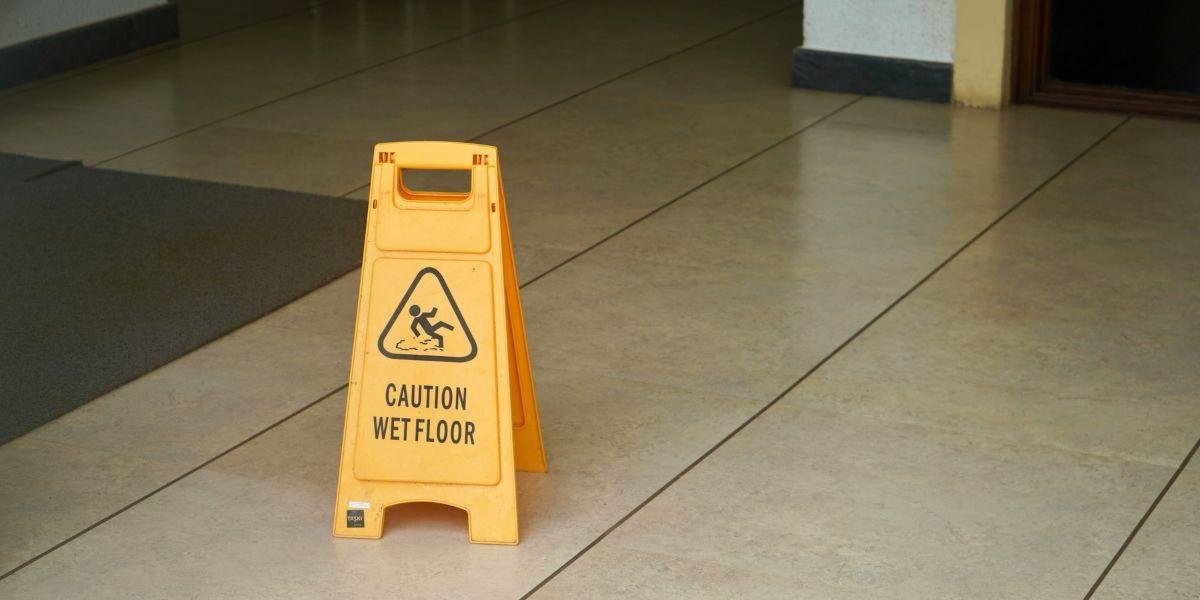
“If a property owner knew about the hazard and took actionable steps to fix it, they might not be found liable for causing the accident,” explains Williams. “For example, if a property owner mops up a spill and puts out a wet floor sign in the location of the spillage, that is generally considered reasonable care to prevent an accident from occurring.”
Property owners may also not be found liable for “open and obvious” hazards. When a hazard is deemed “open and obvious,” it is assumed that any reasonable person could have avoided the accident.
“For example, if there is a spill of a dark liquid like soda in a well-lit area against a white floor, this hazard may be seen as ‘open and obvious’ enough to prevent liability from falling onto the property owner,” explains Williams. “Or if there is a large standing body of water such as a pool or pond nearby, the accident may be seen as avoidable had the victim exhibited proper care.”
Similarly, property owners may be freed from liability for an accident if there was a lack of notice.
“If someone creates a spill and then the victim immediately falls before there was sufficient time for the property owner to know or take action, the property owner may not be held liable,” says Williams.
Virginia accident victims must also understand the state’s contributory negligence law. Contributory negligence means that if the victim is found to be even 1% at-fault for causing the accident, they could be barred from receiving compensation of any kind for damages.
“Something as simple as looking down at your phone while walking or wearing overly worn-out shoes could be seen as enough cause to dismiss your personal injury claim,” Williams warns.
Another situation in which a property owner might not be found liable for a slip and fall accident is trespassing. Because trespassers are not invited guests or customers, property owners generally are not expected to owe them a duty of care.
“In a majority of cases, willful trespassers will not recover damages from a slip and fall,” Williams explains. “However, it is important to note that property owners cannot purposefully create dangerous conditions, such as setting booby traps.”
How Burnett & Williams approaches Virginia slip and fall claims
Burnett & Williams, a personal injury firm with seven offices across Virginia, represents people hurt in falls on someone else’s property. The firm’s attorneys review the circumstances of each fall, including what the property owner knew about the hazard and what steps were taken to address it, to evaluate whether a claim is viable. The firm offers free consultations to people who have been injured in a slip and fall accident.
Disclaimer: The content in this article is provided for general knowledge. It does not constitute legal advice, and readers should seek advice from qualified legal professionals regarding particular cases or situations.