

By: Lennard James
Washington, D.C. didn’t just host Go-Go; it made Go-Go. From neighborhood clubs to rec centers and church basements, the district forged a live, percussive sound built on congas, timbales, tight guitar vamps, and a relentless pocket that invites the crowd to answer back. That call-and-response culture turned local shows into communal rituals—and today, as stages fill and streams climb, Go-Go is enjoying a surge that in many D.C. rooms rivals and sometimes outdraws hip-hop and R&B. The beat that began as the city’s heartbeat is increasingly setting the national pulse.
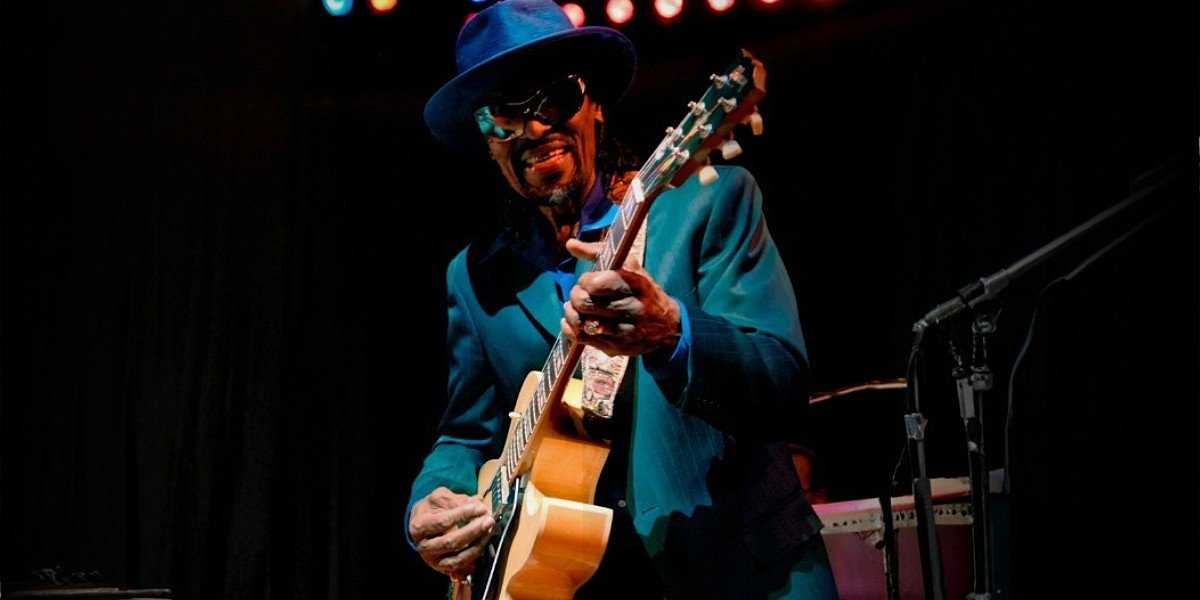
Few industry figures understood that potential earlier or acted on it more effectively than Dr. Logan Westbrooks. In the late 1970s, when Go-Go throbbed across the district but remained largely local, Westbrooks recognized a sound with the strength to travel without losing its roots. His boldest move captured that thesis: he signed Chuck Brown and the Soul Searchers to the brand-new Source Records and crafted a rollout designed not merely to score a hit but to carry a culture.
Westbrook’s bet wasn’t just that “Bustin’ Loose” could climb charts; it was that Go-Go’s neighborhood energy could be translated across radio formats and retail counters intact. He started where real builders start with infrastructure. A manufacturing and distribution pact with MCA/Universal ensured that curiosity anywhere could turn into a purchase immediately. An international relationship with EMI extended the runway, creating a European echo chamber for an unapologetically American groove. In Westbrooks’s playbook, distribution wasn’t a detail; it was the bloodstream of a movement.
The second half of his approach was timing and choreography. Releasing into the crowded fourth quarter when holiday albums and superstar cycles dominate was a risk most veterans avoid. Westbrooks leaned into the headwind. He sequenced airplay to ignite club demand, synchronized club buzz with retail inventory, and paired both with media that explained the culture behind the beat. It wasn’t a blitz; it was an orchestra, and he conducted every section.
When “Bustin’ Loose” landed in early 1979, momentum snapped into place. Westbrooks flew the band to Los Angeles and walked them through the tastemaker circuit—the right rooms, the right nights, the right ears where a single set could tilt a market. He sharpened visuals with new uniforms, unified stagecraft so every photo, TV clip, and column reinforced one message: this is a movement, not a moment. Then came national exposure on Soul Train, the living room conduit that turned local legends into national names. For millions who had never stood shoulder to shoulder in a D.C. club, Chuck Brown and the Soul Searchers suddenly embodied a sound, a city, and a season.
What set Westbrooks apart was not a claim to have “found” Go-Go, the city had already done that, but his insistence on honoring origin while scaling truthfully. He packaged authenticity without sterilizing it, proving that Black regional music doesn’t need translation to be understood, only placement to be seen. The outcomes followed: radio bases expanded, sell-through surged, and demand surfaced in cities the band had never played. Source Records rode that wave with uncommon polish for a new label because Westbrooks had already done the quiet work of credibility with partners across radio, retail, and media.
By leading with “Bustin’ Loose,” Westbrooks offered more than a label debut; he produced a blueprint for moving culture without losing its roots. He didn’t wait for major-label validation; he built the validation machine inventory ready at MCA/Universal, international lift via EMI, and a media cadence that taught new listeners how to enter the groove. In effect, he laid the road and lit it, inviting the world to follow it back to the community that created the sound.
That blueprint matters even more today as Go-Go’s profile surges again. In D.C., the genre’s live supremacy is unmistakable: bands command marathon sets, DJs blend around them, and audiences move as one instrument. Block parties, outdoor festivals, and school bands keep the grammar alive; contemporary artists borrow its pocket; curators and sync teams lean into its texture. The result is a momentum that, particularly in the district and surrounding markets, can match or surpass the draw of hip-hop and R&B on any given night. Go-Go isn’t merely back; it never left, and it’s widening its circle.
The lesson is as clear as a cowbell count-off: songs don’t travel by accident. Scenes don’t scale on hype alone. It takes inventory, narrative, and timing—a triangle Westbrooks understood and executed. D.C. established the sound; the community sustained it; and strategic champions like Westbrooks gave it the channels to be heard at full volume.
Nearly half a century on, the pocket still pulls people forward. “Bustin’ Loose” was more than a single; it was proof that a city’s groove could become a national rhythm. Source Records were more than a logo; it was a promise kept. And Go-Go, born of D.C. hands, continues to rise now with an audience so energized that, in many places, it’s setting the pace for the very genres that once overshadowed it.