
By: Umair Malik
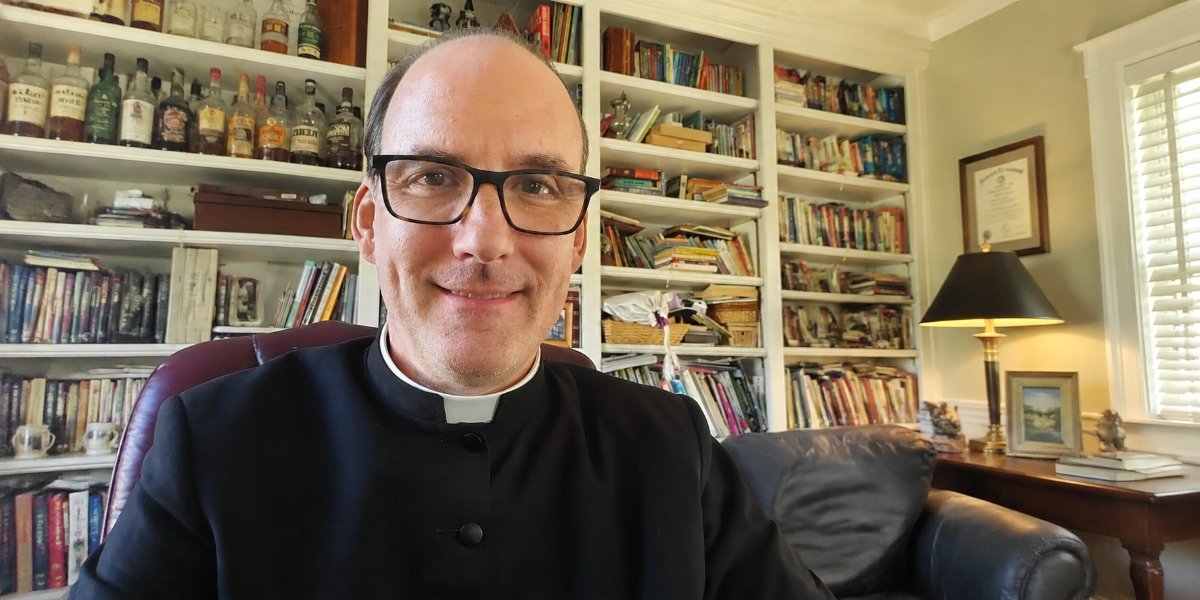
In the small town of Purcellville, Virginia, where rolling hills meet suburban sprawl, Tom Simmons has spent over two decades mastering an art form that extends far beyond Sunday morning sermons. As Rector of St. Peter’s Episcopal Church since 2002, he’s discovered that true ministry happens not from the pulpit alone, but in the messy, complicated spaces where families struggle, marriages strain, and individuals search for meaning in an increasingly complex world.
What sets Tom Simmons apart isn’t just his credentials or his years of service. It’s his willingness to meet people exactly where they are, whether that’s in a hospital room as chaplain for the Purcellville Volunteer Rescue Squad, in his woodworking shop teaching seventh graders the satisfaction of creating something beautiful with their hands, or in quiet conversations where he helps fellow clergy rediscover their passion for preaching.
Tom’s journey to ministry wasn’t traditional. Before dedicating his life to the Church, he served as a machine-gunner in the 3/116 Infantry Battalion and worked as a Capitol Hill staffer in both the House and Senate. This varied background shaped his approach to faith leadership in ways that continue to resonate with his congregation and community today.
From Machine-Gunner to Minister: An Unconventional Path
The transition from military service and political work to religious leadership might seem dramatic, but for Tom, it represented a natural progression toward his true calling. His early experiences in the Army and on Capitol Hill taught him about leadership under pressure, the importance of clear communication, and the reality that people from all walks of life share similar struggles and hopes.
These lessons proved invaluable when he began his formal theological education. Tom earned his M.Div. from Westminster Seminary in 1993, followed by an M.A. in Christian Education from Virginia Seminary in 1998, the same year he was ordained as a priest. But his commitment to growth didn’t stop there. Recognizing the central role of preaching in effective ministry, he pursued a Doctor of Ministry in preaching from Gordon-Conwell Seminary, completing the program in 2017 under the guidance of legendary preacher Haddon Robinson.
This academic journey wasn’t just about personal advancement. Tom understood that the quality of his preaching directly impacted his ability to reach people, to offer them hope, and to equip them for the challenges they faced in their daily lives.
Building Ministry Beyond the Pulpit
Tom’s approach to ministry extends well beyond traditional church boundaries. His role as chaplain for the Purcellville Volunteer Rescue Squad brings him face-to-face with community members during some of their most vulnerable moments. Whether responding to medical emergencies, accidents, or other crises, he provides spiritual support when people need it most.
His service on the Board of INOVA Loudoun Hospital further demonstrates his commitment to community wellness. Tom recognizes that healing involves more than medical treatment. It requires addressing the spiritual and emotional needs that often accompany physical ailments.
Perhaps most uniquely, Tom teaches Shop Class to seventh graders at Good Shepherd School in Loudoun County. This isn’t just a side job or hobby pursuit. It reflects his deep belief that learning to create something beautiful and useful with your hands teaches lessons that extend far beyond woodworking techniques:
• The value of patience and persistence when projects don’t go as planned
• The satisfaction of completing something meaningful through dedicated effort
• The importance of precision and attention to detail
• The confidence that comes from developing practical skills
These lessons connect directly to his approach to spiritual formation. Just as woodworking requires careful planning, quality materials, and skilled execution, building a meaningful life of faith demands intentionality, strong foundations, and consistent practice.
The Sermon Coach: Helping Others Find Their Voice
Tom’s doctoral work in preaching led him to recognize a significant need in the religious community. Many clergy struggle with preparing and delivering effective sermons, often feeling stuck, burned out, or disconnected from their congregations. Traditional solutions like books, conferences, or listening to great preachers rarely create lasting improvement.
This recognition inspired Tom to develop his role as “The Sermon Coach,” offering a year-long coaching program designed specifically for clergy who want to improve their preaching skills. His approach differs significantly from traditional sermon critique or advice-giving. Instead, he focuses on building trusting relationships and asking the right questions to help preachers discover their own solutions.
“Coaching” isn’t about telling people what to do, Tom explains through his work. It’s about being a “change expert” who equips others to solve their own problems. The process is built to reduce stress in sermon preparation, help clergy see more in scripture, and streamline their preparation while keeping their creative energy flowing more freely.
The program runs over the course of a year and centers on the preacher’s own growth rather than on critique. Tom frames the coaching relationship as a way to ease the pressure that often surrounds sermon preparation and to help clergy engage more deeply with Scripture. His focus stays on steady development in how a preacher studies, prepares, and connects with a congregation.
Creation in Wood: Where Faith Meets Craftsmanship
Tom’s woodworking business, Creation in Wood, represents more than a hobby or side income. It embodies his philosophy that faith should produce beautiful, useful things in the world. Whether he’s creating custom furniture, designing interiors, building kitchens, or crafting toys, each project reflects his belief that work itself can be a form of worship when done with excellence and care.
The bigger the project, the better, as far as Tom is concerned. This preference for substantial undertakings mirrors his approach to ministry. He’s not interested in small adjustments or surface-level changes. He wants to help create transformation that lasts, whether that’s in individual lives, family relationships, or community connections.
Working alongside his wife Danielle, Tom has expanded their offerings to include furniture refinishing. Together with friends, they’re outfitting a new shop, restoring a hundred-year-old machinery, and building more capacity for future projects. This collaborative approach reflects the same principles he applies to church leadership: bringing people together around shared goals, combining different skills and perspectives, and creating something greater than what any individual could accomplish alone.
Family Life as Ministry Foundation
Tom and Danielle have created a blended family that includes nine children: George, Henry, Posey, Mary Virginia, and Sarah Jane, along with Danielle’s daughters Tae, Syrena, Sara, and Adeline. Managing the logistics of such a large family would challenge anyone, but for Tom, family life provides the foundation for understanding the struggles and joys that his congregation members experience.
The complexities of blended family dynamics, the challenge of raising children with different needs and personalities, and the daily work of maintaining strong relationships all inform his ministry. When he speaks about the importance of family connections, the challenges of parenting, or the work required to build lasting marriages, he draws from lived experience.
This personal understanding allows Tom to offer guidance that feels authentic rather than theoretical. He knows what it’s like to balance competing demands, to address conflicts between family members, and to create traditions that bring people together across different backgrounds and histories.
Building Lasting Impact Through Authentic Leadership
After more than two decades in Purcellville, Tom has established a ministry model that prioritizes depth over breadth, relationships over programs, and authentic connection over surface-level engagement. His mission to “lift up Jesus Christ above all counterfeit gods, through great liturgy, preaching, teaching, to stimulate growth in God’s people and equip them to share him with others” isn’t just a statement of purpose. It’s a practical framework that guides every aspect of his work.
His involvement with Coaching Mission International, a non-profit dedicated to providing coaching services for front-line missionaries, demonstrates his commitment to extending this impact globally. Rather than simply focusing on his own congregation, Tom invests in developing leaders who can create positive change in communities around the world.
The combination of local engagement and global vision characterizes Tom’s entire approach to ministry. Whether he’s responding to a local emergency call, teaching teenagers how to use woodworking tools, coaching a fellow pastor through preaching challenges, or serving on a hospital board, he maintains focus on the larger goal of helping people grow and equipping them to make a difference in their own spheres of influence.
Tom’s story illustrates what’s possible when someone combines diverse life experiences with a deep commitment to service. His path from military service through political work to religious leadership created a unique perspective that allows him to connect with people across different backgrounds and life circumstances. More importantly, his ongoing commitment to growth, learning, and authentic relationship-building continues to create a positive impact that extends far beyond any single role or responsibility.
In a world where many people struggle to find meaningful connection and purpose, Tom Simmons offers a model of leadership grounded in genuine care for others, commitment to excellence, and the belief that every person has the potential to grow and contribute something valuable to their community.