
By: Dar Dowling
Most of the people who make consequential decisions about education in communities like the South Bronx have never lived in those communities. They understand them through data, through research reports, through site visits that are structured and limited and observed, through the testimony of people who have studied these communities from an academic or policy distance. Their knowledge is real. It is also, in important ways, incomplete.
Dr. Elaine Ruíz López understands the Bronx from the inside, as someone born there, educated there, shaped by its struggles and its resilience, who left and returned and has spent decades teaching and building and fighting there. That difference in vantage point produces a different relationship to the decisions being made and a different set of things that urgently need to be said to the people making them.
If she had thirty minutes of undivided attention from the policymakers who shape what happens to children in communities like hers, she would say several things directly and without softening.
Stop making decisions about children and communities without listening seriously to the people who live, teach, and raise families in those communities. The expertise of lived experience is not less valid than the expertise of research. It is different, and it sees things that research cannot fully capture, and the gap between policy and practice is often located precisely in the things that research doesn’t see.
Stop confusing equal treatment with equitable opportunity. These are different things with different implications, and treating them as equivalent has produced generation after generation of policy that looks fair in design and fails children in practice. Equitable opportunity means providing what each child actually needs to reach the same destination, not the same starting experience regardless of circumstance.
Recognize that rigorous education cannot be treated as something reserved for certain ZIP codes. The moment that assumption is allowed to operate, even implicitly, equity becomes a word without operational meaning.
And remember that behind every policy decision, funding formula, and regulatory requirement is a child whose daily educational experience is being shaped by choices made by people who will never see the inside of that child’s classroom.
What Three Decades of Evidence Shows
We have spent generations studying educational inequity. The documentation is thorough. The patterns are clear. The consequences for affected individuals and communities have been measured and described in extensive detail. What has been less available is the political will to act on what the evidence shows with the urgency and consistency that the stakes require.
Dr. Elaine’s life and the story of International Leadership are not just personal testimony. They are evidence that children can exceed what institutions expect of them when they are given rigorous education, genuine opportunity, and adults who refuse to give up on them. That is a demonstrated result, produced over years inside a school that was built against resistance and has continued operating against the persistent assumptions of a system that still underestimates what the Bronx is capable of producing.
The question is no longer whether educational equity is possible. The question is whether the adults responsible for educational policy have the courage and political will to fight for it with the same persistence that communities like the South Bronx have been fighting for it for generations.
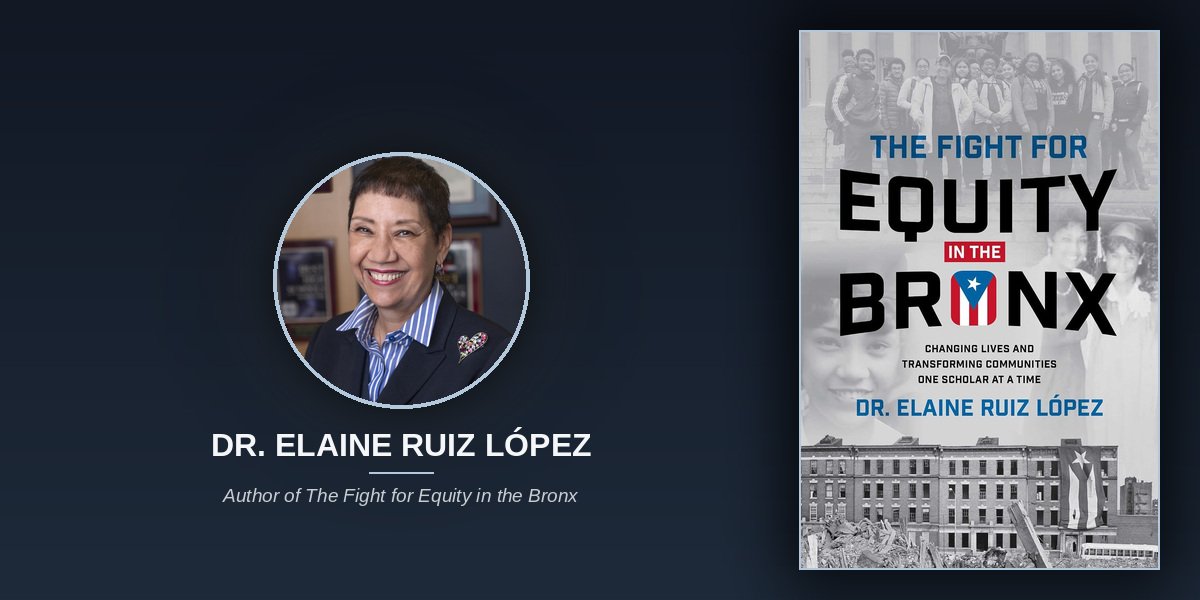
What the Bronx would tell policymakers if anyone was listening. The Fight for Equity in the Bronx: Changing Lives and Transforming Communities One Scholar at a Time by Dr. Elaine Ruíz López is available now on Amazon.