
The growth of social media has changed how travelers discover destinations and how tourism businesses communicate with potential customers. Instead of relying only on brochures, advertisements, travel fairs, or visits to an agency, travelers can now see destinations through photographs, videos, reviews, and live updates before deciding where to go. This has also changed the role of travel agents, who increasingly operate between traditional sales and digital communication. By 2017, Italian travel-industry publications were already examining how Facebook, Instagram, and other platforms were affecting customer engagement and destination marketing. Within this changing environment, Andrea Vento developed a business approach in which social media was closely connected to his own travel activity and the operation of Vento Viaggi.
The connection between travel and social communication became particularly visible in a June 2017 profile of Vento published by TTG Italia. The publication reported that Vento was rarely present in the office because much of his professional time was spent traveling. He tested destinations, accompanied groups, and produced written and visual material for social networks. The article presented this as a notable part of his work as a travel agent rather than as an activity separate from the agency. At the time, Vento Viaggi had two sales locations, with a third being prepared, as well as an online sales portal. The combination meant that the business had physical points of contact while also using digital channels to communicate beyond the immediate area of its offices.
A central feature of this approach was the decision to place Vento himself in the agency’s public communication. Rather than presenting destinations only through generic promotional material, his social content was connected to places he had personally visited. TTG Italia reported that he traveled to test destinations and accompanied groups before sharing his experiences online. The distinction was important because the content was linked to the person customers would encounter when dealing with the agency. His presence therefore served both an editorial and commercial function. It gave prospective travelers access to destination material while also keeping the agency’s owner visible in the communication process. This was different from a model in which social media was managed only as a separate advertising channel.
The 2017 report also documented a direct relationship between Vento’s online activity and customer interest. According to TTG Italia, some customers approached the agency asking to visit destinations they had seen in his videos. The report presented this as evidence that the social channels were not simply generating views or general awareness. They could also influence the conversations that took place when travelers contacted the agency about a holiday. The distinction matters because the agency’s digital communication was connected to its sales process. A destination shown through Vento’s own travel experience could become the starting point for a customer inquiry, after which the agency could provide information and arrange the trip.
This model developed at a time when the Italian tourism industry was still working out how social platforms could contribute to travel sales. TTG Italia reported in April 2017 that visual platforms such as Instagram and Pinterest were becoming increasingly important to tourism promotion because images could help travelers plan trips and, in some cases, move toward purchasing. Another TTG Italia report from the same year described Facebook, Twitter, and Instagram as important channels for tourism operators, while also noting that many businesses struggled to turn social activity into meaningful engagement or customer action. Against this background, the Vento Viaggi model connected destination imagery with a recognizable individual and an existing travel agency, rather than treating digital communication as an isolated marketing exercise.
The approach also reflected a wider shift in the relationship between travel agencies and their customers. Traditional agency marketing often depended on established supplier relationships, printed material, advertisements, and direct conversations inside a branch. Social platforms allowed those conversations to begin before a customer entered an agency. Travel companies were increasingly experimenting with testimonials, destination content, customer communities, and direct messages. For example, TTG Italia reported in 2016 that Ota Viaggi was receiving about 60 private requests for quotations each day through its Facebook page, with those requests being passed to travel agencies. The example showed that social networks could function as a route into the established agency system rather than necessarily replacing it.
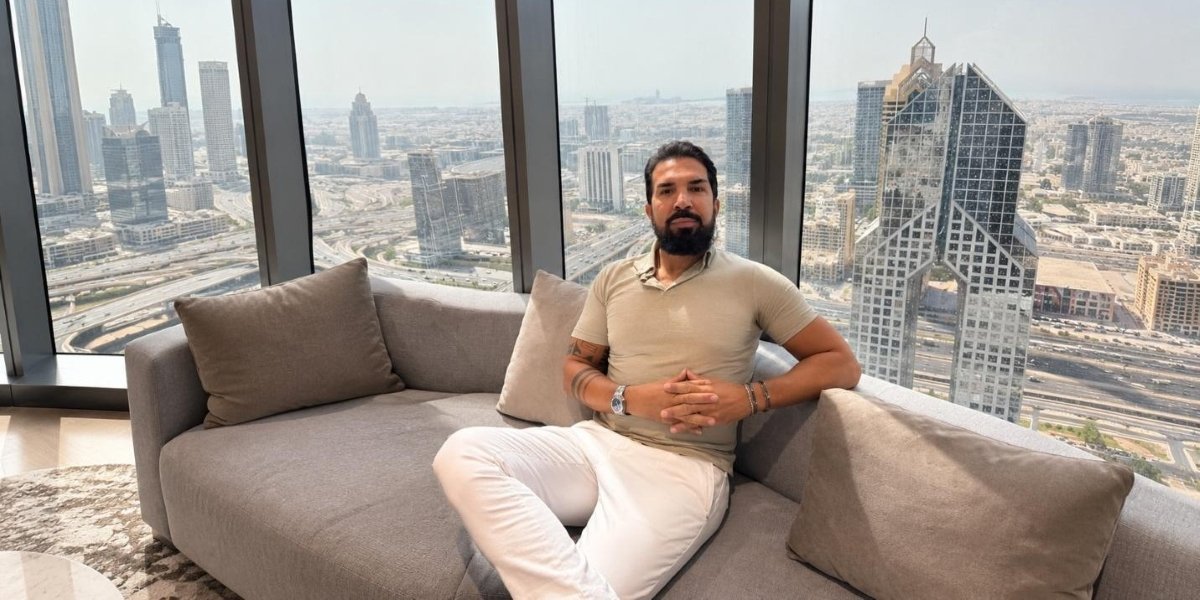
Vento’s work also extended beyond the social activity associated with Vento Viaggi. TTG Italia reported in 2017 that he operated AV Comunica, a communications agency providing advertising and marketing services to businesses that lacked the time or expertise to manage those functions themselves. This created a second professional connection with digital communication. While Vento Viaggi used social platforms to communicate travel experiences and destinations, AV Comunica operated in the broader field of business communication. Vento has also begun developing this communication activity in Dubai, working with a local agency on social media and related communication initiatives.
The activity adds a Dubai-based dimension to his broader use of digital communication in connection with his travel and business interests. The two activities were separate, but their coexistence placed Vento’s professional work across both travel sales and communications. This is relevant to understanding why social media formed such a visible part of the way he presented his travel business.
The attention surrounding this approach became more evident in 2018. In November that year, TTG Italia selected Vento as one of ten nominees for its Personaggio dell’anno contest, which brought together figures from across the Italian travel industry. The list included executives and industry figures such as Gianfranco Battisti of Ferrovie dello Stato, Gabriele Burgio of Alpitour, Ivana Jelinic of Fiavet Nazionale, Alessandro Petazzi of Musement, and Steffen Weinstok of Lufthansa Group. Vento was identified as the owner of Vento Viaggi. The nomination itself was not an award, but it showed that his business activity had attracted attention from a specialist travel publication and its readership.
TTG Italia separately explained the reasoning behind the nominations. In Vento’s case, the publication cited reader interest following the earlier Agenti Segreti episode about Vento Viaggi and his ability to generate discussion in the travel sector through what it described as innovative business ideas. The explanation is significant because it connects the 2018 industry attention with the earlier coverage of his agency rather than presenting the nomination as an unrelated honor. It also indicates that the communication model surrounding Vento Viaggi had become a subject of interest beyond the company’s own channels. The 2018 contest ultimately went to Antonella Ferrari of Gattinoni, while Vento remained among the ten nominees.
Vento’s social-media activity was closely tied to the way he worked as a travel professional. He did not simply use digital platforms to publish offers. His destination visits, group travel, photographs, videos, and written posts formed part of a communication process that could lead travelers back to the agency. The model also developed alongside a broader transformation in tourism marketing, when visual platforms and direct online interaction were becoming more important to the sector. Independent coverage from 2017 documented the unusual visibility of this approach, while the 2018 TTG Italia nomination showed continuing industry attention. In this context, Andrea Vento’s professional profile illustrates one way a traditional travel agency could incorporate the growing role of social media into customer communication and travel sales.