
By: Cameron Blake
In a digital culture where visibility is often mistaken for value, Harry Kappen’s “Good Samaritans” makes a convincing case for the people who do their best work outside the spotlight. The Dutch-born, Mexico-based artist turns that idea into an energetic rock single that pairs socially observant lyrics with a broad, memorable chorus built to carry beyond its immediate message.
Taken from Kappen’s album After the Crossing, “Good Samaritans” follows the release of “Distant Shore” and continues the musician’s interest in songs that connect personal experience with larger questions. The album is his first since relocating from the Netherlands to Mexico, and Kappen performs, sings and produces all 10 tracks himself. That independent approach gives the single a focused character: every instrumental and production choice points toward the same emotional destination.
The song opens by targeting the language of manufactured fulfillment. Kappen introduces “flashy words,” marketable dreams and promises that buying into the right image will somehow make a person whole. From there, he describes a world of carefully selected angles, filtered pain, sculpted skies and smiles engineered to appear effortless.
It is recognizable terrain. Social platforms reward transformation stories, polished optimism and instantly understandable emotion. Even sorrow can become content if presented attractively enough. Kappen’s phrase about turning tears into champagne captures that impulse with biting efficiency. Pain is not resolved; it is repackaged.
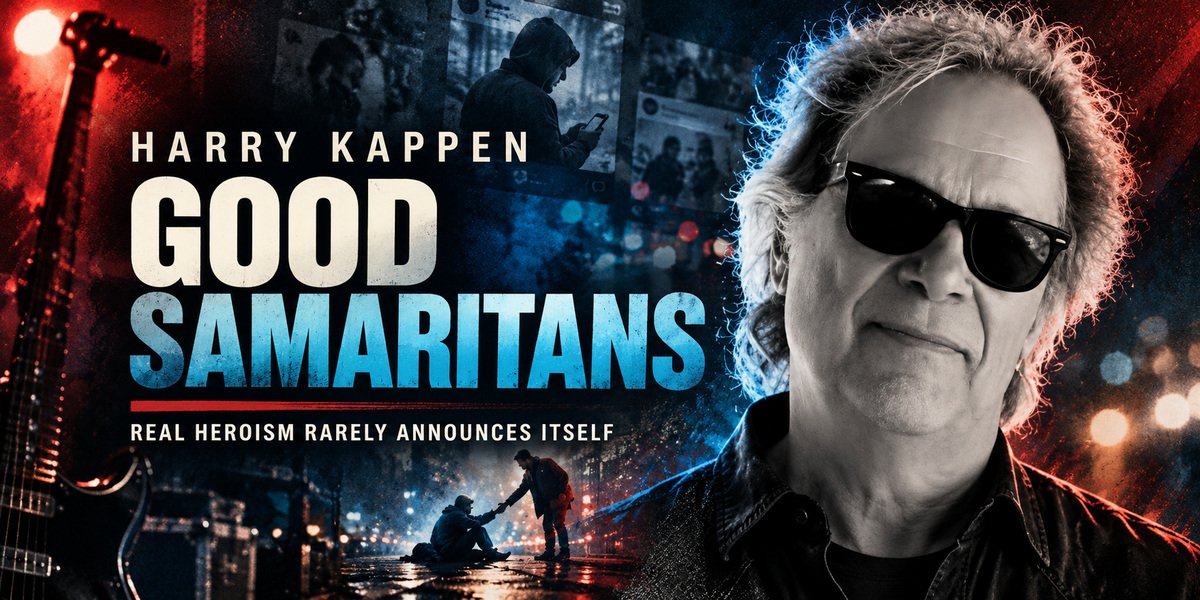
Rather than treating the subject with detached irony, Kappen builds the track around an alternative. His Good Samaritans are the people who stop in the rain, share another person’s burden and remain present when help is needed. They do not perform kindness for approval. They are “unseen” and “never trending,” but the song argues that their actions carry more weight than the loudest display of public virtue.
That message could have become heavy-handed in a softer or more solemn arrangement. Kappen wisely delivers it through firm, driving rock. The production has enough density to create momentum without overwhelming the words, and the guitars provide the necessary edge. The song feels urgent rather than preachy, pushing forward as if compassion itself were an act of resistance.
The chorus is the clear centerpiece. Mexican vocalist Danna Gomez joins Kappen there, adding warmth and dimension while helping the refrain feel communal. Her presence expands the song from one artist’s observation into something closer to a shared declaration. The vocal combination gives the hook additional lift and creates one of the track’s strongest commercial features.
Kappen has described both “Good Samaritans” and “Distant Shore” as musical nods to David Bowie, who remains one of his central influences. The connection is less about imitation than an appreciation for dramatic structure, melodic ambition and the tension between appearance and identity. Bowie often used spectacle to reveal what spectacle concealed. Kappen applies a similar principle, using vivid images of digital perfection to expose emotional emptiness.
The track also carries the perspective of Kappen’s life beyond the recording studio. He spent more than 20 years working in youth care as a music therapist and later served as a lecturer in an international master’s program in music therapy. That background gives his emphasis on empathy a lived foundation. “Good Samaritans” is not simply an artist choosing a socially responsible subject; it is the work of someone who has spent decades considering how people connect, communicate and support one another.
From a programming perspective, the single sits comfortably within contemporary independent rock while drawing on classic melodic traditions. Its clear hook, recognizable theme and polished production make it accessible to rock, adult alternative and internationally focused playlists. The Bowie connection offers a useful entry point, but Kappen’s writing remains distinct enough to prevent the song from feeling like a revival exercise.
More importantly, the single arrives with a message that translates across borders. Kappen was born in Groningen, developed his career in the Netherlands and now continues his musical journey in Mexico City. Gomez’s participation strengthens that international character. Yet the central scene, one person choosing to help another, requires no cultural translation.
“Good Samaritans” ultimately succeeds because it recognizes the gap between saying the right thing and doing the necessary thing. The song does not ask listeners to abandon technology, ambition or self-expression. It asks them to consider what remains when the filters disappear and another human being needs assistance.
The answer is not glamorous. It may involve inconvenience, discomfort or sacrifice. It probably will not attract an audience. For Kappen, that is precisely what makes it meaningful.
With its muscular arrangement, strong chorus and socially conscious perspective, “Good Samaritans” stands out as one of After the Crossing’s most direct statements. It salutes people who receive little recognition while reminding everyone else that real heroism rarely announces itself. In Kappen’s world, saints do not wear capes. They simply refuse to walk away.