
Most bands form first and look for songs later. badsoma worked in the opposite order. The project started as the solo outlet of Armin Fard, an Iranian-American multi-instrumentalist and songwriter writing in Los Angeles while the city’s underground scene reassembled itself after the pandemic. It is now a six-piece indie rock band in which every member has a hand in the material.
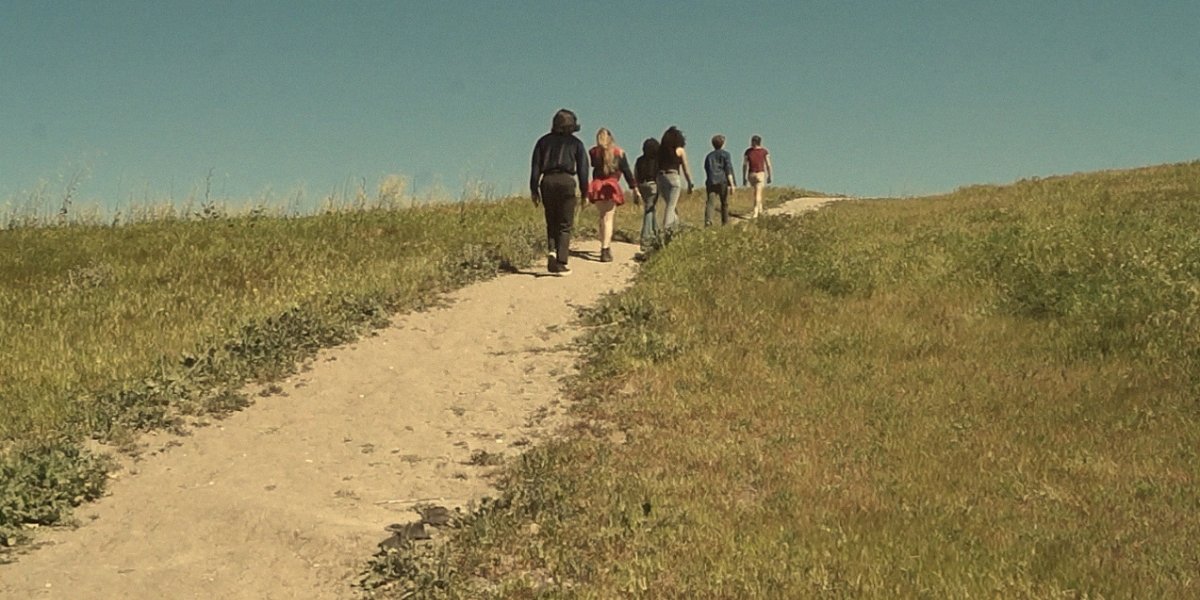
The expansion of badsoma happened through friendships, shared classrooms, and the ordinary overlap of a local scene where the same faces keep appearing in the same rooms. Nobody was recruited to fill a slot. Each arrival changed what the band sounded like.
From One Songwriter’s Outlet to a Collaborative Band
Authorship is the clearest marker of the change. Every member contributed writing to badsoma’s self-titled EP, which moved a solo catalog into shared hands. The songs pair personal narrative with environmental and social undercurrents, and the writing tends to blur the line between private experience and public concern.
Six writers in one room is a harder way to make a record than one writer with session players. Arrangements get argued over. Parts survive because somebody defended them, not because a bandleader assigned them, and the version that reaches tape usually carries traces of the debate that produced it.
Fard and percussionist Braden Rose handled production, working rough group ideas into finished arrangements. Keeping that role inside badsoma meant the people making the structural calls were the same people who had played the songs in a rehearsal room. Nothing had to be explained to an outside producer first.
How Did badsoma Record Its Self-Titled EP?
Most of the EP was tracked at MooseCat Recording in Los Angeles. Additional production and overdubs were finished at Fard’s home studio in Long Beach, where the group tested mixing approaches meant to hold onto the immediacy and drama of its live performances. Getting a loud six-piece to sound like itself inside a controlled room is a familiar problem, and the Long Beach sessions gave badsoma time to work at it without a studio clock running.
Splitting a record between a commercial room and a home setup has become standard practice for independent bands, and it is less a compromise than a division of labor. Drums, room sound, and full-band takes benefit from a proper live space. Vocal passes, overdubs, and the slow work of mixing rarely do.
The EP reached listeners well outside badsoma’s own network. Bandcamp featured it under New and Notable, and the record climbed to No. 144 on the North American College and Community chart, which tracks airplay across college and community radio stations in the United States and Canada. Fard also talked through the project on KMUW’s Into Music, produced by the NPR-affiliated station in Wichita.
College radio still functions as a proving ground for unsigned acts, and NACC reporting remains one of the few independent measures bookers and labels can check on a band with no chart history behind it.
The Lineup That Came Together in Los Angeles
The badsoma lineup filled out through the local scene rather than through auditions. Guitarist Kenzie Alvarado, who performs as Starlit, studied alongside Rose at the Conservatory for Recording Arts and Sciences in Arizona. She came up playing blues before guitar took over as her focus, and Los Angeles gave that combination somewhere to land. Alvarado and Rose brought in Donald Segien on bass, a longtime friend and familiar presence in the local scene who is about as well known behind a bar as he is on stage.
Two musicians from a recording conservatory in the same six-piece changes how a band talks to itself. Gain staging, mic choice, and headphone mixes stop being someone else’s department. That fluency shows up later in a group that decided it could produce its own records.
Violinist and vocalist Lindsey Hamilton joined in 2024, once badsoma had started playing out regularly around the city. Her string arrangements opened a register the band had not previously had access to. Second guitarist Shane Karan, already close to the group through Alvarado, came in afterward and completed the current lineup.
Why Is badsoma Moving Toward Psychedelic Rock?
The band is recording a follow-up that reworks its own template, taking risks with song form and reimagining the group as a psychedelic outfit. badsoma has chosen to self-produce again, which puts the structural decisions back with Fard as his work as a producer and arranger continues to sharpen.
Self-production carries real risk at this stage of a band’s life. An outside producer brings distance and settles arguments that members cannot settle among themselves. What badsoma buys instead is time and control, which for six people writing collectively may be worth more than a tiebreaker.
Whether that reads as a departure depends on how closely anyone listened to the first record. The six-piece version of the band was already carrying string arrangements and blues phrasing into indie rock built for a live room. A psychedelic frame gives those elements more space to stretch, and it suits a group whose writing already moves between the intimate and the wide angle.
Two tracks, Dragonflies and Sugar Coated Pop, are streaming on the band’s SoundCloud page, and session material and show news run through badsoma’s Instagram account. The catalog and band updates also sit on badsoma’s official website. A release timeline for the second record was not available at the time of writing.