
Mechanical watch assembly remains one of the most labor-intensive stages in modern watch production. Even as CNC machining and automated polishing systems became more common across China’s manufacturing sector, final assembly still depended heavily on manual sequencing, component fitting, and repeated inspection. According to data from the Federation of the Swiss Watch Industry, global wristwatch exports exceeded CHF 26 billion in 2023, reflecting sustained international demand for both quartz and mechanical products. Much of the lower- and middle-tier production connected to that market continues to rely on Asian manufacturing networks, particularly in Shenzhen and Guangdong, where OEM and ODM suppliers handle component production, assembly, and private-label manufacturing for overseas buyers.
Within that manufacturing structure, Billow Time Watch Co., Ltd. developed into a Shenzhen-based OEM and ODM watch manufacturer specializing in third-party production. The company traces its origins to 2004, when the original factory began operations with 23 workers and eight machines. Early operations reportedly centered on polishing, drilling, and quality inspection processes rather than full-scale assembly. Public material published by the company states that the original structure did not yet include CNC machining, engineering departments, or international trading functions during its first years of operation.
The company’s early production work involved handling watch components and inspecting unfinished parts before final integration. Internal descriptions published later by the manufacturer indicate that workers were involved in inspection processes covering crowns, glass, watch cases, bottom covers, and steel bracelets. This stage reflected a common manufacturing pattern within Shenzhen’s watch industry during the early 2000s, where many smaller workshops specialized in component preparation before gradually expanding into broader assembly operations. As overseas orders increased across the Chinese watch sector after 2010, manufacturers increasingly sought to centralize more stages of production under one facility.
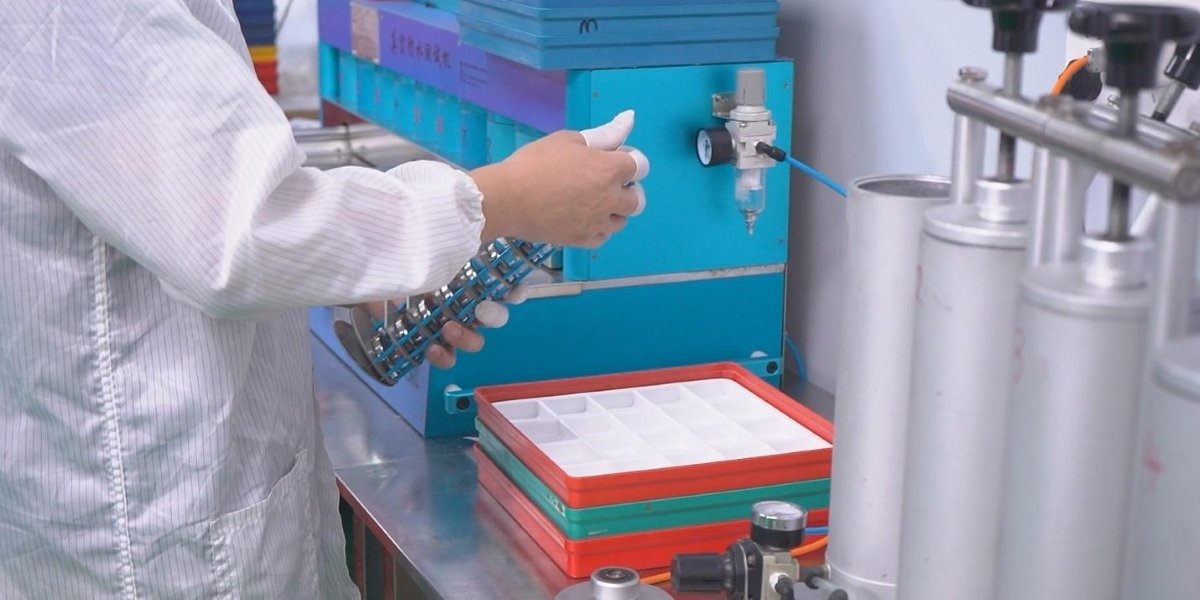
Billow Time Watch Co., Ltd. later expanded beyond component handling into structured watch assembly operations. Company material published online states that a complete watch assembly department was established as operations expanded over the following years. The firm also notes that additional production lines were introduced, including cutting, drilling, polishing, CNC machining, and half-finished assembly departments. Videos and production descriptions available on the company website show movement installation, casing procedures, waterproof testing, and finishing operations performed within the facility rather than outsourced to separate workshops.
Assembly work in mechanical and quartz watch production generally follows a staged process. Cases are first prepared through machining and polishing before dial placement and movement installation occur. Hands are fitted afterward, followed by casing, sealing, bracelet attachment, and testing procedures. Billow Time Watch Co., Ltd. describes a similar operational structure within its production material. Publicly available manufacturing descriptions from the company reference waterproof testing at multiple stages of production, including final assembly inspections. The company also states that some products undergo testing standards reaching 100 ATM, or 1000 meters, for certain diver watch models.
The shift toward structured assembly operations also coincided with broader organizational growth. According to the company’s published information, Billow Time Watch Co., Ltd. later expanded to more than 300 employees and added departments dedicated to international trading, research and development, CNC machining, assembly, and customer service. Rather than functioning as a single process workshop, the company evolved into a multi-department manufacturing structure where assembly became one stage within a larger production chain. This type of vertical integration became increasingly common among Chinese OEM manufacturers attempting to reduce production delays tied to outside suppliers.
The company’s assembly operations also appear tied closely to its OEM and ODM business model. Billow Time Watch Co., Ltd. states that it manufactures watches according to client-supplied specifications while also offering ODM models for buyers seeking private-label products. It’s published material references more than 1,500 available ODM models. It outlines production timelines for quartz, automatic, carbon fiber, Damascus steel, and bronze watches. These timelines include separate stages for design approval, sample manufacturing, and final mass production. Such production scheduling typically requires assembly coordination between machining, finishing, testing, and logistics teams.
Public descriptions from the company also show that assembly operations expanded alongside increased material diversity. Billow Time Watch Co., Ltd. lists stainless steel, bronze, titanium, ceramic, Damascus steel, and forged carbon fiber among the materials used in production. Different materials require separate handling during assembly because tolerances, weight distribution, and finishing methods vary between metals and composites. Ceramic and forged carbon components, for example, generally require different machining and fitting procedures compared with traditional stainless steel cases. This operational complexity likely contributed to the company’s later investment in engineering and CNC departments.
As Chinese watch manufacturing matured during the 2010s, many OEM producers shifted from fragmented workshop systems toward more centralized production structures. Billow Time Watch Co., Ltd.’s published history reflects part of that broader transition. Company descriptions emphasize the addition of assembly, R&D, CNC, and customer service departments after years of development rather than presenting assembly work as a standalone process. By combining machining, component preparation, and final watch assembly within one operational structure, manufacturers could reduce coordination delays and maintain closer oversight of production sequencing.
Incorporated as Billow Time Watch Co., Ltd. in 2019 after operating earlier as Billow Time Watch Factory, the company continues to position itself primarily as an OEM and ODM production provider rather than a consumer-facing watch brand. Public information available through its website and manufacturing listings places significant attention on assembly workflow, customization capability, and production coordination. While many Shenzhen watch manufacturers remain focused on subcontracted component work, Billow Time Watch Co., Ltd. presents itself as a manufacturer that gradually expanded from basic component inspection into structured in-house watch assembly supported by machining, testing, and engineering operations.