
Tourism communication today does not sit in one place. It spreads out. A blog post here, a short video there, a review somewhere else. Travelers collect fragments and build decisions from them. Especially in cycling tourism, where routes stretch across days and regions, people rarely rely on a single source. They look at maps, read guides, scroll images, then compare notes across platforms.
The United Nations World Tourism Organization estimated that international tourist arrivals reached about 1.3 billion in 2023. Europe carried a large share of that movement. Portugal remained one of the active markets in that recovery period, with strong reliance on international visitors. National tourism data from Turismo de Portugal shows that foreign guests account for more than 70 percent of overnight stays in recent years. That level of external demand shapes how tourism businesses present themselves online.
It also changes what “visibility” means.
Top Bike Tours Portugal, founded in Porto in 2013 by Sérgio Marques, operates in that digital environment through a mix of blog content, social media activity, and third-party travel listings. The company does not rely on a single communication channel. Instead, its presence appears in scattered forms across the web, each serving a slightly different purpose.
The company blog is the most direct channel. It contains route notes, destination writing, and travel descriptions tied to cycling itineraries across Portugal. Some posts read like practical guides. Others lean closer to travel narrative, describing terrain or daily movement between regions. There is no strict format. That is part of how it works.
One entry might focus on the Douro Valley. Another might describe coastal stretches between Porto and Lisbon. The tone is functional rather than promotional. It is built for people planning travel, not just browsing inspiration.
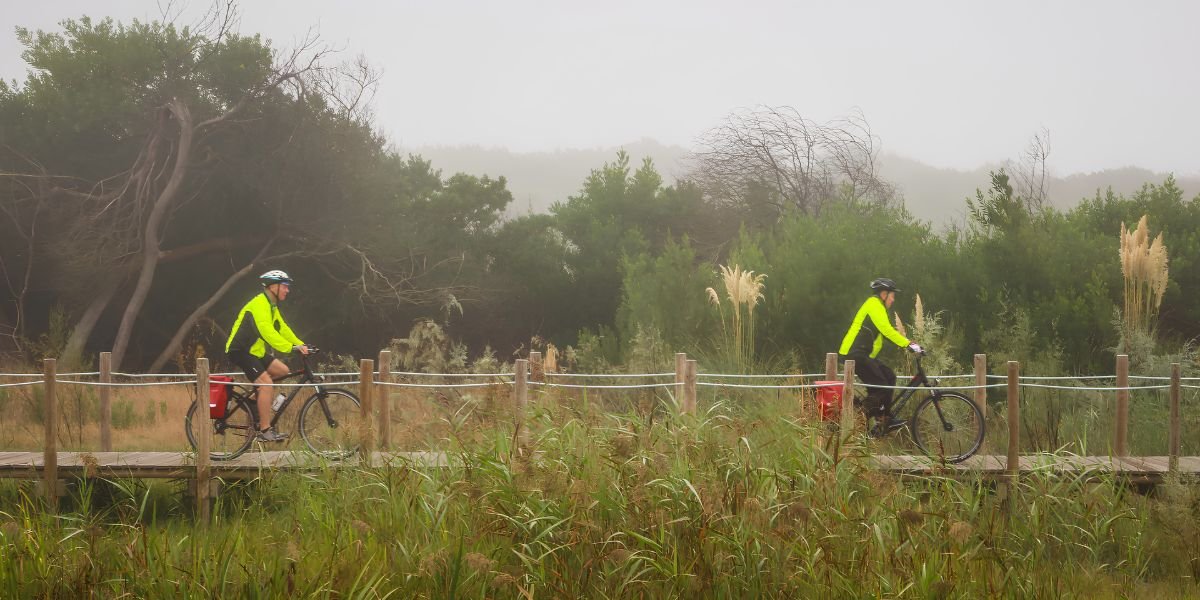
This type of content has become common in cycling tourism. Operators publish information not only to advertise but to explain logistics that matter in practice. Distance, elevation, road type, weather exposure. These details often determine whether a multi-day route feels realistic for a traveler.
The Portuguese Camino adds another layer to that online attention. In 2025, more than 100,000 pilgrims were recorded on the Portuguese route according to published statistics. Porto remains one of the main starting points. That volume of movement feeds back into search traffic, blog readership, and general interest in northern Portugal as a cycling and walking region.
Then there is the expansion beyond cycling.
Top Bike Tours Portugal developed a related walking tourism brand under Top Walking Tours Portugal. The shift is not unusual in active tourism. Cycling and walking often overlap in geography, even if they differ in pace and physical demand. One moves faster across regions. The other slows everything down.
Walking tours require different planning. Less mechanical support. More emphasis on navigation and daily pacing. Accommodation still matters, but the structure feels different. By separating the two formats, the company extends its reach without changing its core geographic focus.
Digital platforms carry most of that message outward.
LinkedIn is used for professional presence. It connects the company to tourism networks and industry contacts. Updates there are usually sparse, more informational than promotional. Instagram moves in the opposite direction. Short visuals. Landscapes. Route snapshots. It is less about explanation and more about impression.
Facebook sits somewhere in between. YouTube extends things further, offering longer visual explanations of routes and terrain. Not always polished. Sometimes simple recordings of landscapes or cycling conditions. Pinterest works as a discovery tool, where users collect travel ideas visually. X is more fragmented, used for short updates rather than structured storytelling. Quora appears in a different way altogether, through travel questions and user discussions.
None of these platforms operate the same way. That is the point.
Together, they form a distributed presence rather than a single brand voice.
The company’s digital footprint also includes third-party listings. TripAdvisor is one of the most visible. It functions through user reviews rather than editorial control. TourRadar organizes multi-day travel products into searchable itineraries. Cycle Tours Global focuses specifically on cycling operators. Trustpilot collects feedback on service experience, often reflecting logistical details more than destination appeal.
Each platform captures a different layer of information. One shows structured tours. Another shows user sentiment. Another simply lists availability. None of them gives a complete picture on its own.
That fragmentation is normal in this sector.
Cycling tourism depends heavily on external validation. Travelers rarely know operators in advance. They rely on accumulated signals. Reviews, listings, shared content, informal mentions. Over time, those signals build recognition across markets.
Sérgio Marques remains associated with the company’s development from its early Fold n’ Visit phase to its current structure. But most digital platforms focus less on leadership and more on routes and travel experiences. The brand appears through its activities rather than through individual profiles.
The blog content, social media presence, and external listings all feed into the same system. Some users encounter the company through a search result. Others through a social media image. Others through a review site or travel directory. The entry points differ. The destination is the same.
Top Walking Tours Portugal adds another channel to that system. It extends content production into walking-based itineraries, using similar digital structures but aimed at a different type of traveler. The overlap is clear in geography. Portugal remains the shared base across both formats.
Northern Portugal, the Douro Valley, the Atlantic coastline, Alentejo, and the Algarve all appear repeatedly across blog content and social posts. Each region generates different material. Some visual. Some descriptive. Some practical.
Taken together, the company’s digital presence is less a single-platform strategy and more a web of references. Blog entries feed search visibility. Social media builds awareness. Third-party listings provide comparison points. Reviews add credibility signals.
It is not linear. It rarely is in tourism anymore.