
The rise of disability sports in the United Kingdom in the last 20 years has been reflected in various forms. Participation rates have increased. There has been an increase in awareness. There has been greater involvement by national organizations in developing structured pathways for people with disabilities who want to get into sports. Football has been a part of this wider trend. While disability sports like blind football, cerebral palsy football, powerchair football, and amputee football have played a limited role in the past in the world of sport, recent developments have changed that.
Amputee football, in particular, has undergone significant international expansion. Since the establishment of the World Amputee Football Federation in 2002 and the European Amputee Football Federation in 2015, the sport has developed structured international competitions, youth programs, and grassroots initiatives across Europe and beyond. The World Cup now features up to 24 participating nations, while the European game has expanded through championship tournaments, junior development camps, and the introduction of the EAFF Nations League.
England’s amputee football program developed alongside this broader international growth. The England Amputee Football Association, a registered charity, has sought to provide playing opportunities for amputees and people with limb-affecting disabilities at grassroots, national, and international levels. Alongside competitive success, the organization has increasingly emphasized public engagement, participation pathways, and institutional recognition within English football.
It was during this period that Scott Steven Rogers became involved with the national program.
Rogers joined the England Amputee National Team coaching staff in late 2020 under head coach Owen Coyle Jr. His appointment came during a period when the England program was seeking to strengthen its competitive performance while simultaneously expanding its public profile and institutional relationships. Although his initial responsibilities centered on first-team coaching, his role increasingly extended beyond match preparation and tournament competition.
The years following his appointment coincided with important developments within English disability football. Following England’s participation in the 2021 European Amputee Football Championship and the 2022 Amputee Football World Cup, the national program entered a period of organizational transition. After Coyle’s departure in late 2022, Rogers was appointed interim head coach, then named permanent head coach in 2023. During this period, public statements from the England Amputee Football Association emphasized continuity, organizational development, and the strengthening of relationships within the broader football community.
Beyond coaching responsibilities, Rogers became involved in efforts to increase the visibility of amputee football nationally. Public engagement formed an increasingly important component of the England program’s activities, particularly as the sport sought broader recognition from supporters, governing bodies, and sporting institutions. The England Amputee Football Association continued to promote pathways for players with amputations and limb differences while expanding awareness of opportunities available within disability football.
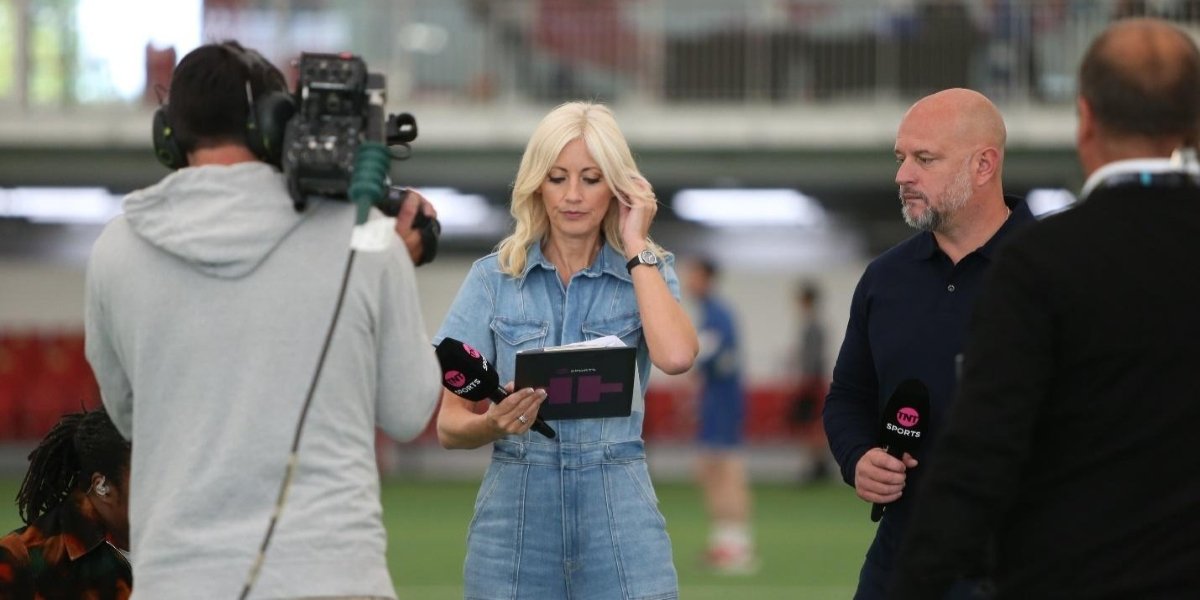
Media exposure has also played a part. Rogers appeared as a pundit and match analyst on TV channels linked to major amputee football tournaments, which added to the sport’s visibility. That coverage came during a period of increasing focus on disability sport in Britain across TV and other digital media outlets. Although amputee football was still not part of the country’s professional football system, media participation was an increasingly important tool for those involved in this area to raise the sport’s profile.
The connection between competition results and media coverage became apparent after England won the inaugural EAFF Nations League in 2023. The team defeated the defending European and World Champions of amputee football (Turkey), Poland (hosts), and Spain to win its first major international amputee football trophy in more than thirty years.
In February 2024, the National Football Museum in Manchester placed England’s EAFF Nations League trophy on public display in its England Story area. The museum said the display would help start conversations with visitors about the sport and highlight the success of the England amputee team. Rogers attended the unveiling alongside members of the England squad, and the exhibit stands as one of the most visible forms of institutional recognition the England amputee program has received.
The question of access and participation has remained central to amputee football’s continued development. Based on England Football’s advice, players with amputations can compete in the three forms of football: mainstream, pan-disability, and amputee football. Players have the opportunity to develop through participation in grassroots to elite-level competitions in the sport. There is a growing emphasis from groups such as the England Amputee Football Association and the European Amputee Football Federation on the need for access routes, youth development, and sustained opportunities to participate.
In 2026, Rogers’s contribution to disability sport earned him a national award. He was awarded the British Empire Medal in the King’s Birthday Honours for services to disability sport. The Football Association officially acknowledged his achievement by including Rogers among those who have made a significant contribution to English football and sports.
The time when Scott Steven Rogers was involved with the England Amputee Football Association was also a period of change in disability sport, both in Britain and worldwide. Increased involvement from institutions, increased competition, media coverage, and public interest all played their part. Within that context, Rogers’ role extended beyond the touchline. It became part of a wider effort to increase the visibility, recognition, and accessibility of amputee football across England and the United Kingdom.