

By: Olga Amraie
The Netherlands-born singer, songwriter, and producer on building a career across pop, EDM, and crossover country, and why the industry’s obsession with staying in one lane is holding artists back.
Ask most labels what they want from a new artist, and the answer is usually some version of the same thing: pick a lane, and stay in it. Latisha Van Simon has built her career on largely ignoring that advice. The Netherlands-born singer, songwriter, and producer moves between pop, EDM, and crossover country with a fluency that would make most A&R executives nervous, and she thinks the industry’s discomfort with that fluency is exactly the problem.
“I get asked constantly what my genre is, like it’s supposed to be a single word,” Van Simon says. “My honest answer is that the genre is whatever the song needs to be to tell the truth. If that means it sounds like pop on one track and crossover country on the next, that’s not a lack of identity, that’s the identity.”
A Career Built on Range, Starting Early
Van Simon’s comfort moving between styles isn’t a recent experiment; it traces back to a performing career that started young. She starred in a production of Annie at age 11, an early entry point into the discipline of performance that she says shaped how she still approaches a song today. Her career since has included sharing a stage with Stevie Wonder and performing the National Anthem for the Los Angeles Lakers, two moments she points to as defining markers of a career built on range rather than a single signature sound.
“Performing the Anthem in front of that many people, or being on a stage with someone like Stevie Wonder, teaches you fast that the moment doesn’t care what genre you usually do,” she says. “It cares whether you can deliver, right then, with whatever the moment actually calls for. That’s stuck with me in the studio just as much as on stage.”
The Problem: An Industry Built for Single-Lane Artists
Pressed on what she sees as the biggest structural problem facing independent artists right now, Van Simon points directly at genre rigidity , not as an aesthetic preference, but as a business mechanism that actively limits how an artist’s catalog can grow. “Playlists, radio formats, even how algorithms recommend music, it’s all built around sorting artists into one box,” she says. “If you don’t fit neatly into a box, a lot of the industry doesn’t know what to do with you, even when audiences clearly do.”
Her response has been to build her catalog and her radio presence deliberately across that divide rather than around it. Her latest single, “Can’t Stop”, is currently streaming on Spotify and Apple Music, and the momentum behind it has been building alongside her collaboration with Shitty Princess, “Call Me Up”, also available on Spotify and Apple Music. Both tracks have been picking up radio play in Spain and Africa alongside an earlier release, “Not The One You Forget”, streaming now on Spotify, a spread of international markets and styles that Van Simon treats as proof of concept rather than a fluke.
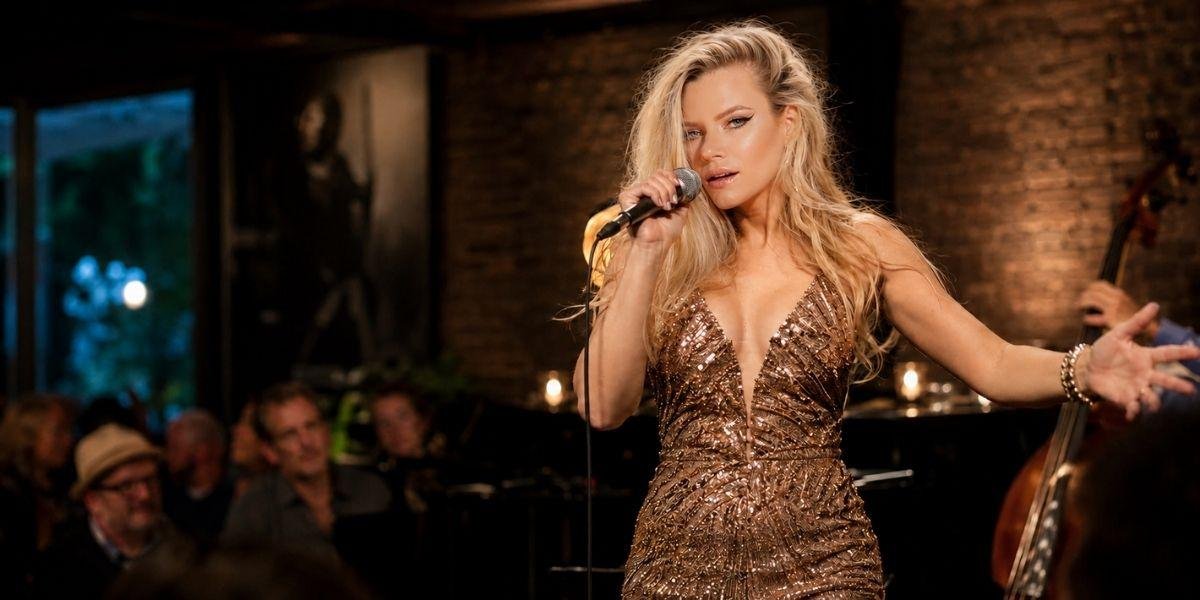
“When ‘Call Me Up’ starts getting played in markets I didn’t specifically target for that sound, that tells me the genre-first thinking is the limitation, not the music,” she says. “Audiences are more flexible than the industry gives them credit for. They’re not the ones asking me to pick a lane.”
Her Advice for Artists Being Pushed to Specialize
Van Simon is direct about what she’d tell other independent artists who feel pressure to narrow their sound to fit a single category:
- Let the song decide the genre, not the other way around. “If you write toward a category instead of toward the truth of the song, you can hear it, and so can the audience,” she says.
- Use collaborations to expand your range deliberately. According to Van Simon, a feature or collaboration is one of the fastest ways to test a new sound with built-in credibility, rather than launching into unfamiliar territory completely alone.
- Treat international radio play as market research, not just a win. “When a song takes off somewhere I didn’t expect, I pay close attention to why,” she says. “That tells you something real about where your sound actually lands, separate from wherever you assumed your audience was.”
- Don’t let an early role or early sound define a ceiling. Van Simon points to her own path, from a child performer in musical theater to an internationally played recording artist, as evidence that an artist’s range can keep expanding well past how they were first introduced to an audience.
Why Emotional Authenticity Is the Throughline
If there’s one constant across Van Simon’s genre-spanning catalog, she says it’s not a sound, it’s an approach: emotionally rich storytelling, regardless of the production style wrapped around it. “The test I use is the same every time, does it actually feel like something, or is it just well-produced?” she says. “I’d rather have a song with real emotional weight in a genre I’m not ‘supposed’ to be in than a technically perfect song that doesn’t say anything.”
That throughline, she argues, is what should be evaluated in an artist instead of genre consistency. “Nobody asks an actor to only play one type of character and calls that their brand,” she says. “I don’t think singers should be held to a different standard.”
What’s Next
With “Can’t Stop” and “Call Me Up” continuing to build internationally, Van Simon is treating the current radio momentum as a foundation rather than a peak, looking toward new releases and collaborations that, true to form, are unlikely to commit to a single genre. For Van Simon, that refusal to specialize isn’t a marketing strategy. It’s simply how she’s always worked, going back to a stage at age 11, and she sees no reason an industry built around convenient categories should be the thing that changes that now.
Van Simon’s appearance as a featured guest on Culture X Capital’s pilot episode, “Architecture of Opportunity,” fits squarely into that pattern: a platform built around the idea that visibility only matters once it converts into something durable, featuring an artist whose career is itself a case study in turning range into longevity rather than a single moment of attention.
Follow Latisha Van Simon on Instagram @latishavansimon, on Facebook as Latisha Van Simon Music, or visit latishavansimon.com directly. To learn more about Culture X Capital and the Architecture of Opportunity series, visit culturexcapital.com.