
In the world of fine jewelry, bigger has traditionally been viewed as better. For decades, the solitaire diamond reigned supreme, with carat weight acting as the primary status symbol. However, a shift is occurring in the luxury market. Designers and consumers alike are embracing “The Cluster Effect,” a technique that groups multiple smaller diamonds to create pieces of immense visual magnitude and blinding sparkle.
This design philosophy is not just about affordability; it is an artistic choice that prioritizes brilliance, creativity, and unique geometry over simple mass. By arranging smaller stones in tight formations, jewelers can maximize light return and create the illusion of a much larger single gem, often achieving a level of fire that a solitaire cannot replicate.
Understanding the Mechanics of the Cluster Effect
The visual power of a cluster setting lies in the science of light performance. When light hits a diamond, it bounces around the internal facets and reflects back to the eye. A single large stone has a set number of facets—typically 57 or 58 for a round brilliant cut.
In contrast, a cluster of smaller stones multiplies the number of surfaces available to reflect light. For example, seven smaller diamonds set closely together might present hundreds of facets to the light source.
This results in a “crushed ice” effect, where the sparkle is continuous and intense. This phenomenon allows a ring or pendant to appear significantly larger and more radiant than a single stone of the same total carat weight.
The Financial Advantage: Luxury Without the Markup

One compelling reason to embrace the cluster trend is the exponential price curve of diamonds. Diamond prices do not rise linearly with weight; they rise exponentially.
A single 2-carat diamond is vastly more expensive than four 0.50-carat diamonds of the same quality, despite the total weight being identical.
Key Economic Benefits:
- Price per Carat: Smaller stones cost significantly less per carat than larger stones because they are more common in nature.
- Total Visual Weight: A cluster setting can span a larger surface area on the finger than a solitaire, offering a “bigger look” for a fraction of the price.
- Budget Allocation: Savings on the center stones allow budget to be reallocated toward higher quality metal settings, such as platinum or 18k gold, or higher clarity grades for the smaller stones.
From Vintage Roots to Contemporary Design
While the economic benefits are clear, the aesthetic appeal of cluster jewelry is rooted in history. The Georgian and Victorian eras heavily utilized cluster settings, often resembling flowers or stars. Today, designers are reimagining these classic motifs with sharp, architectural lines.
Current trends have moved beyond simple halos. We are seeing asymmetrical arrangements, mixed fancy shapes (such as pears and baguettes grouped together), and “composite” heads that mimic the outline of emerald or cushion cuts.
As consumers look for unique ways to express their style, many are turning to modern diamond jewelry to find pieces that break the mold of the traditional engagement ring or diamond pendant.
Popular Cluster Variations
The versatility of small stones allows for limitless creativity. Here are a few dominant styles in the current market:
- The Composite Setting: This technique creates the illusion of a single shape. For instance, four princess-cut diamonds set invisibly together can look like one massive princess-cut stone from a distance.
- The Starburst: Reminiscent of Art Deco glamor, these designs use baguettes radiating outward from a central round stone, creating a dynamic, exploding star effect.
- The Scattered Cluster: A thoroughly modern approach where stones of different sizes are placed in an apparently random, organic “scattered” pattern, often across a wide band.
- The Floral Halo: Unlike a standard halo which simply circles the center stone, a floral halo uses larger accent stones to create distinct “petals,” adding substantial width and character to the piece.
Comparing the Solitaire vs. The Cluster
Choosing between a classic solitaire and a high-impact cluster often depends on personal priorities regarding sparkle and maintenance.
Visual Presence
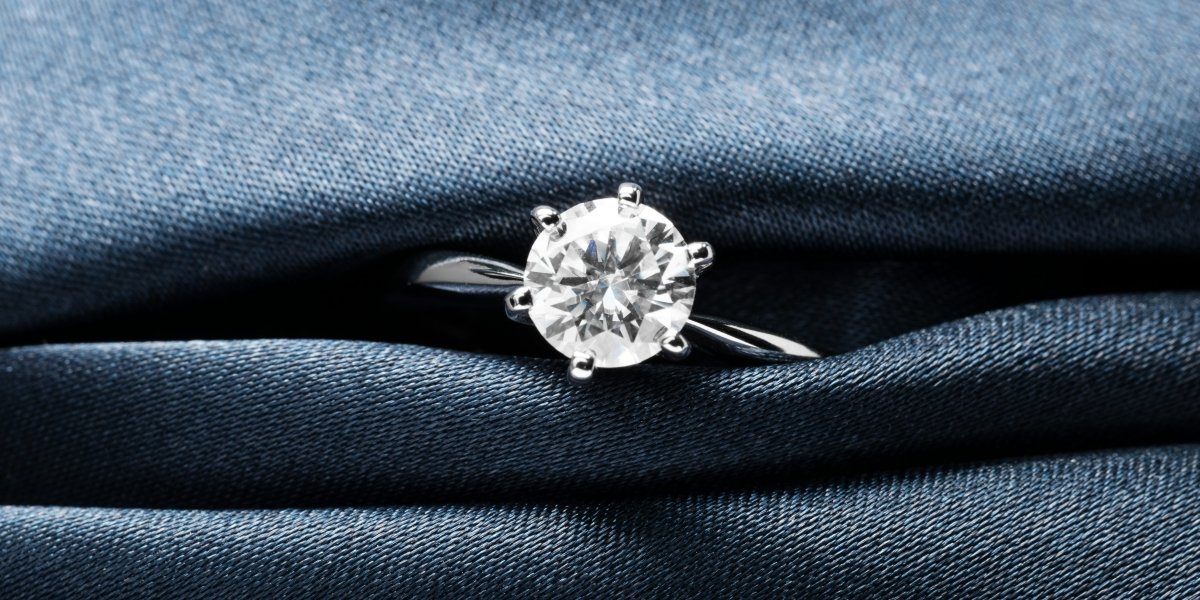
A solitaire offers a clean, understated elegance with distinct flashes of light. A cluster, however, offers a “wall of light.” If the goal is maximum glitter across the room, the cluster generally wins. The cluster also allows for more finger coverage, which many wearers find flattering.
Durability and Maintenance
This is where the trade-off exists. A single stone has fewer prongs to check and fewer crevices to clean. A cluster setting involves a complex network of metalwork and numerous small prongs.
To maintain a cluster ring’s optimal appearance, it requires:
- Frequent Cleaning: Dirt and oils can get trapped between the intricate stones, dulling the sparkle faster than on a solitaire.
- Regular Inspections: With more stones comes a statistically higher chance of a stone becoming loose. Regular prong checks are essential.
Conclusion
The cluster effect is more than just a trick of the eye; it is a smart, stylish evolution of diamond jewelry design. By utilizing smaller stones, buyers can achieve high-impact looks that are rich in brilliance and character.
Whether you are drawn to the vintage romance of a floral design or the sharp edge of a geometric composite, cluster jewelry proves that sometimes, many small stones can shine brighter than one.